Home -> Law Blog Directory -> Intellectual Property Law Blogs -> Seattle Trademark Lawyer
(866) 635-2689 for Personal Injury or (866) 635-9402 for Criminal Defense
Find a Local Lawyer
Divorce (866) 635-6190
Personal Injury (866) 635-2689
Criminal Defense (866) 635-9402

Intellectual Property Law
: Seattle Trademark LawyerWrestler "Warrior" Avoids Game Maker's Motion to Dismiss Trademark Claims
By Michael Atkins
Ultimate Creations, Inc., the licensing company owned by former professional wrestler Warrior (his legal name) brought suit in the District of Arizona against video game maker THQ Inc. over video games that use Ultimate’s WARRIOR registered trademark and and trade dress in the wrestler’s costume and image. THQ moved for summary judgment on grounds of fair use and the protectability of Ultimate’s unregistered trade dress. On Jan. 24, Judge Stephen McNamee found in Ultimate’s favor.
The court summarized the facts as follows:
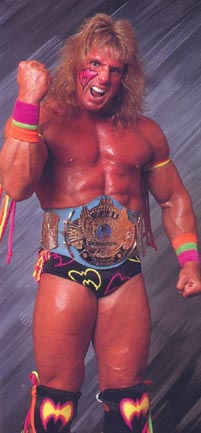 “Warrior claims that his wrestling character was distinctive because he had long, flowing hair, wore arm pads and knee pads with a fringe, displayed on his costume and face a logo roughly in the shape of an upside-down ‘W’ — the logo, originated from ‘Parts Unknown,’ had an exceptionally muscular build, and used ‘signature’ moves in his wrestling performances.
“In 2003, the parties entered into negotiations to license intellectual property associated with Warrior. The draft license agreement included the use of Warrior’s ‘name, voice, facsimile signature, nickname, likeness, signature moves, entrance music, endorsement, right of publicity, and biographical sketch as it may appear in photographs, film, video clips, etc.’ However, the negotiations eventually terminated without entering into a contract.”
In the lawsuit, “Plaintiff alleges that Defendant began to use the likeness, moves, trade dress, marks, and other intellectual property associated with Warrior in its video game as early as October of 2003. Specifically, players may use the [Create-A-Wrestler] feature on the games to create a character that has a similar build, face paint, and logo symbol as Warrior, that uses the entrance and finishing moves found under the label ‘OUW’ that are similar to Warrior’s, that has the call name ‘The Warrior’ or ‘Warrior,’ and is from ‘Parts Unknown.’ Plaintiff contends that this feature causes confusion as to whether Plaintiff sponsored or is associated with the game.”
On THQ’s fair use defense, the court concluded: “Defendant argues that it used the name ‘Warrior’ descriptively and not as a mark, and thus its use was fair. Despite this assertion, the Court finds that a jury could find that neither the mark nor the similar symbol was used in good faith based on the prior, unsuccessful negotiations between the parties. What is clear is that the use of the name Warrior was not necessary to create or market the video games. Also, the combination of signature moves, the face paint, the similar symbol and ‘Warrior’ call name suggests that Defendant intentionally provided the tools for consumers to create a wrestler in the likeness of Warrior without regard to his intellectual property rights. Thus, a jury could conclude that Defendant’s use was an improper attempt to capitalize on the popularity of the Warrior wrestling character. As such, summary judgment on Plaintiff’s claim of infringement of registered trademarks and service marks is not proper.”
As for Ultimate’s trade dress claim, the court found: “Warrior’s trade dress involves the costume, symbol, face paint, and color combinations that make up the overall image of his wrestling character. Through the video games, Defendant has made these elements available to its consumers. The websites where players exchange information regarding how to create the Warrior wrestling character suggest that Warrior has a distinctive trade dress, which supports a finding of secondary meaning in Warrior’s overall appearance, and denotes possible confusion as to whether the video games are affiliated with Warrior himself. The elements of trade dress also appear to be non-functional, and the combination of the elements may be sufficient to create a distinctive trade dress that is capable of protection. Thus, taken as a whole, a reasonable person could find that Defendant has committed a violation of Plaintiff’s unregistered trademarks or trade dress under Section 43(a) by confusing consumers as to Plaintiff’s affiliation, connection, or association with Defendant’s games.”
The case cite is Ultimate Creations, Inc. v. THQ Inc., 2008 WL 215827, No. 05-1134 (D. Ariz. Jan. 24, 2008).
Full post as published by Seattle Trademark Lawyer on January 30, 2008 (boomark / email).
Paxil Lawsuit
Paxil Claims, Lawsuits, and Injuries
Wrestler Estate
Family of pro wrestler settle multi million dollar estate lawsuit.
Wal-Mart
Avoids Criminal Charges over Clerk's Death
Adidas Imitators
Payless Shoesource to pay $304.6 million settlement in trademark lawsuit.
International Game Technology
401(k) / ERISA Stock Fraud
Nintendo Control
Video game giant to pay $21 million settlement in patent lawsuit.
False Claims
Attorney Robert Arledge ordered to pay $5.8 million after making false Fen Phen settlement claims.

#1 Online Legal Resource

On 08-25 at 15:46PM
Acute perpendicular parking #NYPD #NYFD
On 08-18 at 22:18PM
Parallel parking gone bad. Too much gas UES NYC
On 08-18 at 21:41PM
UES NYC
On 08-18 at 21:25PM
Twitter suspends journalist critical of broadcast partner's coverage on dubious grounds @guyadams #nbcfail #twitterfail
On 07-30 at 17:57PM
Model example of 1st Amendment suppression by the People of New York City's Michael Bloomberg #OWS #NYPD
On 07-12 at 21:07PM
AG Holder lackadaisical on Operation in our Sites domain name seizures & RIAA lobbied free speech suppression @dajaz1
On 06-08 at 22:44PM
Why is the Catholic Church going to court over Obama contraception policy? @NewYorker commentary
On 05-31 at 10:08AM
Monks sue Louisiana for right to sell caskets made from forrest destroyed by Katrina
On 05-31 at 07:47AM
Are the abortion ultrasound laws headed for the Supreme Court?
On 05-15 at 21:52PM





Lloyd Sales Company Files Arkansas Trademark Infringement Declaratory Action Against The Game
Silicon Knights v. Epic: Motion to Dismiss Denied, Discovery Begins
Naked Cowboy v. Mars Lawsuit Allowed to Go Forward
Mahco Has Not Abandoned Its Trademark, At Least Not Yet
Microsoft Sues Dentist for Cybersquatting And Trademark Infringement
Court Cannot Choose Between Two Reasonable Interpretations on a Motion to Dismiss





 |
|
Contact Us | About Us | Celebrity Law Blog |
Our Partners | Disclaimer
| Law Blog Directory
| Law Jobs
| Law Tweets
| Oil Spill Video
All original material © 1999-2011 by USLaw.com. All other material, including Blog Directory feed content, are © by their respective copyright holders. |