
Home -> Law Blog Directory -> International Law Blogs -> Excess Copyright
(866) 635-2689 for Personal Injury or (866) 635-9402 for Criminal Defense
Find a Local Lawyer
Divorce (866) 635-6190
Personal Injury (866) 635-2689
Criminal Defense (866) 635-9402

International Law
: Excess CopyrightApproval of $45 million Estate of Chet Baker Estate class action settlement is somewhat unsettled
By Howard Knopf, Esq.
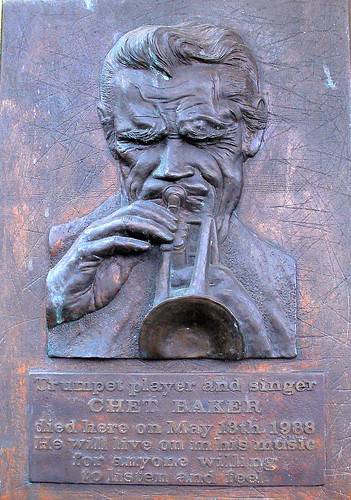
Here's an update on the class action law suit against the four big multinational record companies led by the Estate of Chet Baker. This update follows upon a report from March 8, 2011 by Drew Hasselback, himself a lawyer and the legal post editor of the National Post/Financial post. Here is my original blog about this from February 8, 2011.
It seems that certain matters had not been finalized at the time of the settlement approval hearing scheduled for February 15, 2011. I don't know whether these may have included some of the issues I raised in my earlier posting. Moreover, Paul Baker, the son of Chet Baker had raised an issue concerning the right of his mother, Carol Baker, one of the representative plaintiffs, to enter into an agreement on behalf of the estate.
The Robertson case took at least a dozen years from the statement of claim until the payout cheques were finally mailed just the other day and had to go to all the way to the Supreme Court of Canada, where judgment was rendered in 2006. The Google class action is now about 5.5 years old and has probably not even reached the "end of the beginning" stage. Indeed, Judge Denis Chin - one of the most highly regarded and decisive trial judges in the USA (he was entrusted with Bernie Madoff) - has been deliberating on a decision on the amended settlement for over a year. Few expect that his decision will be the end of the matter. Here's a possible flow chart for the aftermath.
By contrast, this "pending lists" matter will have been resolved - if indeed it does get approved by the Court as requested - relatively extremely quickly in about 2 1/2 years and without most of the normal and time consuming litigation stages. In fact, there is no reference on the settlement website to even a statement of defence having been filed. So, presumably there was no discovery. The publicly available documentation in support of the approval hearing is available here, and is not very extensive - though as noted above it now finally includes the important 36 page "term sheet" which is described on the settlement website as "Key Terms of Settlement". Presumably very few potential class members would have had a chance to see this essential document prior to it being posted. Some other significant aspects of the settlement have not been made public at all, as I noted earlier. One of the more interesting aspects of the settlement was that the opt-out threshold is to be provided to the Court on a confidential basis. The total fees sought for class action counsel have also not been disclosed. By way of contrast, the posted Google documentation is vastly more detailed, voluminous and informative.
Out of that, there will be a request for approval of what will likely be several million dollars in legal fees, disbursements and commissions deducted before any money reaches music composers. The total amount of deductions that will be sought has not been disclosed on the settlement website. While $45 million or so is indeed an impressive amount, it is a very small fraction of the originally estimated liability figure of more than $6 billion based upon potential statutory minimum damages. This $6 billion figure was originally announced and explained by Prof. Michael Geist, who who founded and oversees CIPPIC (the legal clinic located at and supported in part by by the University of Ottawa), that has been closely involved in this very big stakes case.
It would all work out to something less than $135 per song net in the hands of composers after deductions. The record companies apparently didn't pay for the necessary rights over the years, thereby allegedly infringing their own artists' and other artists' copyrights. The normal minimum statutory damages amount that a court would award is $500 per title, though the court has discretion to reduce this figure.There were allegedly more than 300,000 works in issue. So, a "volume" discount would have been conceivable if the court were to have found that application of the minimum of $500 was "grossly out of proportion to the infringement".
Interestingly, these are the very same commercial record companies that are saying that a proposed $5,000 cap on statutory damages per individual for non-commercial copying in Bill C-32 is a "license to steal".

Full post as published by Excess Copyright on March 16, 2011 (boomark / email).
Paxil Lawsuit
Paxil Claims, Lawsuits, and Injuries
Real Estate Brokers
Questions home sellers should ask potential brokers
Real Estate Brokers
The role brokersplay
Estate Planning
Documents: durable power of attorney, living will, letter of instruction, and insurance trust
Wrestler Estate
Family of pro wrestler settle multi million dollar estate lawsuit.
Estate of Seth Tobias
$25 million estate to be split as part of settlement.
Estate Planners Face Elder Abuse Class Action
California Estate Planners Face Elder Abuse Class Action
Killer Heir
Estate of Fred Keller pays $40 million settlement.
Rutland School District
Double pay offered as part of class action wage dispute settlement, pending court approval.
Parmalat SpA
Italy's biggest dairy company awaits final approval for a securities settlement that would pay investors $10.5 million

#1 Online Legal Resource

On 08-25 at 15:46PM
Acute perpendicular parking #NYPD #NYFD
On 08-18 at 22:18PM
Parallel parking gone bad. Too much gas UES NYC
On 08-18 at 21:41PM
UES NYC
On 08-18 at 21:25PM
Twitter suspends journalist critical of broadcast partner's coverage on dubious grounds @guyadams #nbcfail #twitterfail
On 07-30 at 17:57PM
Model example of 1st Amendment suppression by the People of New York City's Michael Bloomberg #OWS #NYPD
On 07-12 at 21:07PM
AG Holder lackadaisical on Operation in our Sites domain name seizures & RIAA lobbied free speech suppression @dajaz1
On 06-08 at 22:44PM
Why is the Catholic Church going to court over Obama contraception policy? @NewYorker commentary
On 05-31 at 10:08AM
Monks sue Louisiana for right to sell caskets made from forrest destroyed by Katrina
On 05-31 at 07:47AM
Are the abortion ultrasound laws headed for the Supreme Court?
On 05-15 at 21:52PM





Claimants Award In Shell Oil Gasoline Pipeline Class Action Case Reviewed For Abuse Of Discretion
Baker & McKenzie to Pay $6.65 Million to Coudert Bros. Estate
$39.3 million payout may be delayed by appeal
Canadian Copyright Class Action Against the Recording Industry
Estate Settlement Glossary of Terms
2009 Tax Changes that May Affect Your Estate Plan





 |
|
Contact Us | About Us | Celebrity Law Blog |
Our Partners | Disclaimer
| Law Blog Directory
| Law Jobs
| Law Tweets
| Oil Spill Video
All original material © 1999-2011 by USLaw.com. All other material, including Blog Directory feed content, are © by their respective copyright holders. |