
Home -> Law Blog Directory -> Miscellaneous Blogs -> Quiz Law
(866) 635-2689 for Personal Injury or (866) 635-9402 for Criminal Defense
Find a Local Lawyer
Divorce (866) 635-6190
Personal Injury (866) 635-2689
Criminal Defense (866) 635-9402

Miscellaneous
: Quiz LawWhere Is that Fourth Amendment? I Know I Had it Around Here Somewhere.
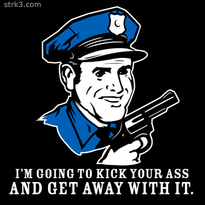 The Supreme Court, now apparently firmly titled to the conservative side when it comes to Fourth Amendment matters, has struck another blow against our constitution protections. The Court today ruled that passengers pulled over for a routine traffic stop can be frisked, even if police do not suspect the passenger has or is about to commit a crime.
The Supreme Court ruled Monday that police officers have leeway to frisk a passenger in a car stopped for a traffic violation even if nothing indicates the passenger has committed a crime or is about to do so.
The court on Monday unanimously overruled an Arizona appeals court that threw out evidence found during such an encounter.
The case involved a 2002 pat-down search of an Eloy, Ariz., man by an Oro Valley police officer, who found a gun and marijuana.
The justices accepted Arizona's argument that traffic stops are inherently dangerous for police and that pat-downs are permissible when an officer has a reasonable suspicion that the passenger may be armed and dangerous.
This comes on the heels of a ruling last week, in which the Supremes ruled that the exclusionary rule does not apply when the police accidentally violate your Fourth Amendment rights. What's most surprising about this case, however, is that it was a unanimous ruling.
All I'm saying is: If you get pulled over for running a stop light, be prepared for a cavity search.
Full post as published by Quiz Law on January 28, 2009 (boomark / email).
Parody is a Protected Form of Speech
Targets of criticism seek to shut down Internet sites that poke fun

#1 Online Legal Resource

On 08-25 at 15:46PM
Acute perpendicular parking #NYPD #NYFD
On 08-18 at 22:18PM
Parallel parking gone bad. Too much gas UES NYC
On 08-18 at 21:41PM
UES NYC
On 08-18 at 21:25PM
Twitter suspends journalist critical of broadcast partner's coverage on dubious grounds @guyadams #nbcfail #twitterfail
On 07-30 at 17:57PM
Model example of 1st Amendment suppression by the People of New York City's Michael Bloomberg #OWS #NYPD
On 07-12 at 21:07PM
AG Holder lackadaisical on Operation in our Sites domain name seizures & RIAA lobbied free speech suppression @dajaz1
On 06-08 at 22:44PM
Why is the Catholic Church going to court over Obama contraception policy? @NewYorker commentary
On 05-31 at 10:08AM
Monks sue Louisiana for right to sell caskets made from forrest destroyed by Katrina
On 05-31 at 07:47AM
Are the abortion ultrasound laws headed for the Supreme Court?
On 05-15 at 21:52PM





Clancy, "The Fourth Amendment: Its History and Interpretation":
Wilson on the Fourth Amendment
Kerr on Fourth Amendment Injunctions
Arcila on Steinberg on the Fourth Amendment
Are the modern Second Amendment and Fourth Amendment on a collision course





 |
|
Contact Us | About Us | Celebrity Law Blog |
Our Partners | Disclaimer
| Law Blog Directory
| Law Jobs
| Law Tweets
| Oil Spill Video
All original material © 1999-2011 by USLaw.com. All other material, including Blog Directory feed content, are © by their respective copyright holders. |