
Home -> Law Blog Directory -> Consumer Law Blogs -> 43(B)log
(866) 635-2689 for Personal Injury or (866) 635-9402 for Criminal Defense
Find a Local Lawyer
Divorce (866) 635-6190
Personal Injury (866) 635-2689
Criminal Defense (866) 635-9402

Consumer Law
: 43(B)logTrademark infringement from sharing a specialized license plate?
By Rebecca Tushnet
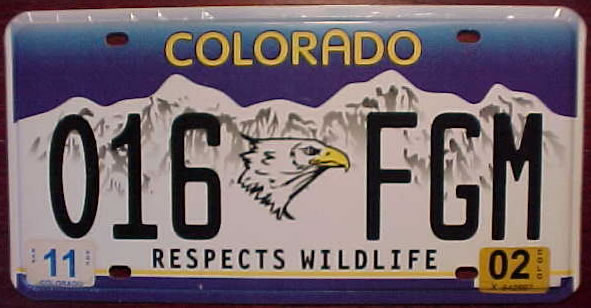
In 1999, nonprofit plaintiff REF (loves predators, doesn?t believe in global warming) allegedly signed a contract with the Colorado Department of Motor Vehicles for a specialty license plate. The plate features a drawing of the head of an eagle (or other bird of prey) and the words "Respects Wildlife." REF then obtained a Colorado state trademark registration for the plate and registered a copyright in the design. At first, only members of REF could get the plate. Recently, the Colorado legislature amended the statute governing specialty license plates to permit issuance of the plate to members of RMRP, another Colorado nonprofit. RMRP then began to use an ?essentially identical? plate to attract members, and put images of the license plate on its website and in its promotional materials. REF sued.
RMRP moved to dismiss the non-copyright claims (Lanham Act false designation of origin, unfair competition, and false advertising, with coordinate state law claims). It argued that there was no connection to interstate commerce, because only owners of vehicles registered in Colorado may receive the specialty plates at issue. REF argued that posting images of the design on RMRP?s website satisfied the interstate commerce requirement, and that the vouchers RMRP issues to its members for the license plate, and some members may not be Colorado residents. The court quoted precedent that, while the internet is generally an instrumentality of interstate commerce, that doesn?t mean that any use of the internet is necessarily commercial for Lanham Act purposes. ?However, the pleadings claim the use of the plate to solicit membership throughout the world, which may be found to be a commercial use in interstate commerce.? This was enough to state a plausible claim, even though there was a question whether the specific activity associated with the license plate itself had any economic impact outside the state.
(Unmentioned at this point is a really interesting issue: who?s allegedly confused, and over what? If the use of the design doesn?t make RMRP members think they?re REF members, then all that?s at issue is a very odd kind of post-sale confusion, mediated through the state. And isn?t the state?s role here also of interest? If it specifically permitted this use, then there?s at least some argument for deference to that judgment.)
RMRP also argued that the state law claims were preempted by copyright. At a minimum, REP could plead its claims in the alternative, since RMRP denied the validity of the copyright, so there was no preemption based on the pleadings.

Full post as published by 43(B)log on November 15, 2010 (boomark / email).
Comcast Agrees Tentative $16 Million Settlement in Consumer File Sharing Class Action
Comcast Agrees Tentative $16 Million Settlement in Consumer File Sharing Class Action
Adidas Imitators
Payless Shoesource to pay $304.6 million settlement in trademark lawsuit.
Compound License
Palatin Technologies pays Competitive Technologies $800,000 agreement dispute settlement.
The Princeton Review
$2.6 million settlement reached in patent infringement case.
Spike Lee and Showtime
Settlement reached in script copyright infringement lawsuit.
Trade Secrets
Razorsight agreed to pay $4.5 million settlement in infringement lawsuit.

#1 Online Legal Resource

On 08-25 at 15:46PM
Acute perpendicular parking #NYPD #NYFD
On 08-18 at 22:18PM
Parallel parking gone bad. Too much gas UES NYC
On 08-18 at 21:41PM
UES NYC
On 08-18 at 21:25PM
Twitter suspends journalist critical of broadcast partner's coverage on dubious grounds @guyadams #nbcfail #twitterfail
On 07-30 at 17:57PM
Model example of 1st Amendment suppression by the People of New York City's Michael Bloomberg #OWS #NYPD
On 07-12 at 21:07PM
AG Holder lackadaisical on Operation in our Sites domain name seizures & RIAA lobbied free speech suppression @dajaz1
On 06-08 at 22:44PM
Why is the Catholic Church going to court over Obama contraception policy? @NewYorker commentary
On 05-31 at 10:08AM
Monks sue Louisiana for right to sell caskets made from forrest destroyed by Katrina
On 05-31 at 07:47AM
Are the abortion ultrasound laws headed for the Supreme Court?
On 05-15 at 21:52PM





IM GAY License Plate Offensive to the General Public, Oklahoma Government Agency Concludes
Plaintiff Speaks Out on South Carolina License Plate Case
Secondary trademark infringement: The whole of the law
Cops seize "sovereign citizen" license plate
Critics Question Vetting of Organizations Receiving VA "Choose Life" License Plate Fee
Christian License Plate Considered in Florida





 |
|
Contact Us | About Us | Celebrity Law Blog |
Our Partners | Disclaimer
| Law Blog Directory
| Law Jobs
| Law Tweets
| Oil Spill Video
All original material © 1999-2011 by USLaw.com. All other material, including Blog Directory feed content, are © by their respective copyright holders. |