
Home -> Law Blog Directory -> Podcasts Blogs -> InternetCases.com
(866) 635-2689 for Personal Injury or (866) 635-9402 for Criminal Defense
Find a Local Lawyer
Divorce (866) 635-6190
Personal Injury (866) 635-2689
Criminal Defense (866) 635-9402

Podcasts
: InternetCases.comCourt rejects RIAA?s arguments against 24 cent ringtone royalty rate
By Evan Brown

Recording Industry Ass’n of America, Inc. v. Librarian of Congress, — F.3d —, 2010 WL 2487842 (D.C. Cir. June 22, 2010)
Recorded music is usually subject to copyright protection in two ways — the musical composition (think sheet music and lyrics) is protected by one copyright, and the actual sound recording is protected by another copyright. In general, for someone other than the copyright owner to use a copyrighted work (e.g., to copy or distribute it), he or she must get a license from the copyright owner (setting aside exceptions such as fair use).
The compulsory license schema
But there’s a kind of zany exception to the general requirement of a negotiated license when it comes to reuse of a musical composition. Others seeking to make such further reuse can do so without obtaining an agreement with the owner of the copyright in the musical composition, provided that the reuser obtain and pay a fee for a “compulsory license.” The mechanics for such licensing system are set up in Section 115 of the Copyright Act (17 USC 115).
There is a Copyright Royalty Board (CRB) that is the Library of Congress oversees. This three-member panel sets the fees due to copyright owners under the Section 115 compulsory license schema.
Ring-a-ling cha-ching
As you probably know, ringtones that sample popular songs are popular these days. (As a commuter on public transportation I can attest to what a scourge this is on our modern society.) Since they’re all the rage, they’re big business.
In 2009, after some complex hearings, the CRB set the rate for payment under a compulsory license at 24 cents per ringtone sold. The Recording Industry Association of American (RIAA) had argued that its copyright owners were entitled to a percentage of total revenue, not a flat “penny-rate.” Unhappy with the CRB’s determination, it appealed to the U.S. Court of Appeals for the District of Columbia Circuit. The court affirmed the CRB’s penny-rate of 24 cents.
How the CRB was right
The CRB determined that a penny-rate was more in line with reimbursing copyright owners for the use of their works. In upholding the CRB’s determination on this point, the court observed that in other cases it had validated the CRB’s preference for a royalty system based on the number of copyrighted works sold — like the penny rate — as being more directly tied to the nature of the right being licensed than a percentage-of-revenue rate.
Moreover, the CRB had determined (and the court agreed) that a percentage revenue model did not make as much sense for the sale of individual copyrighted works as it would in the sale of media that is streamed or broadcast. Simply stated, it is relatively easy to measure how many copies of a ringtone are sold, and thus easy to calculate a penny-rate amount. But that is more difficult to accurately do in the case, for example, of satellite radio. Those difficulties were not present in this situation, and that militated against the adoption of a percentage rate.
Finally, the court agreed with the CRB’s disdain for the complexity of calculating a percentage of revenue licensing fee. A penny-rate structure was much simpler to handle than the “salient difficulties” presented by the RIAA’s percentage mode.
The court found nothing unreasonable about the CRB’s determination (i.e., that the the CRB’s determination was not arbitrary and capricious, and so it affirmed that determination.
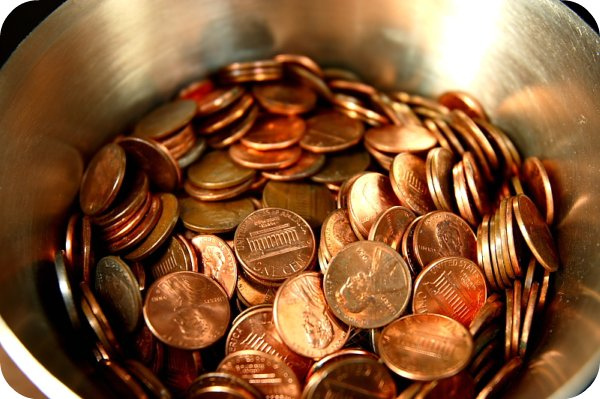
Photo courtesy Flickr user totalAldo under this Creative Commons license.
Full post as published by InternetCases.com on June 23, 2010 (boomark / email).
Selection of State Supreme Court Judges
How State Court Judges are Selected
Law Enforcement and Criminal Justice Career Choices
Descriptions of law enforcement occupations
California Supreme Court Proposition 8 Decision
Court Rejects Challenges to Proposition 8, but Finds Marriages Valid
Truth In Lending Act
Consumer Loans and Consumer Credit Protection Act
Is Barack Obama a Natural Born Citizen?
Wrotnowski v. Bysiewicz (Supreme Court): Does Obama meet the constitutional requirements to be President
Heart of Atlanta v United States
Supreme Court Decision: Civil Rights Act Protected by Interstate Commerce Clause
Auction Rate Securities
ARS stocks purchased from a brokerage
Nail Guns
Injury Rate More Than Doubles in Three Years
JP Morgan Chase & Co
Faces Lawsuit Over Hikes in Credit Card Interest Rate
Ebay Fined
French Court Sets Fine at $61 Million
Personal Injury
Appeals Court Upholds Congressional Legislation
Nobel Biocare Nobel Direct
alleging dental implants have a high failure rate.

#1 Online Legal Resource

On 08-25 at 15:46PM
Acute perpendicular parking #NYPD #NYFD
On 08-18 at 22:18PM
Parallel parking gone bad. Too much gas UES NYC
On 08-18 at 21:41PM
UES NYC
On 08-18 at 21:25PM
Twitter suspends journalist critical of broadcast partner's coverage on dubious grounds @guyadams #nbcfail #twitterfail
On 07-30 at 17:57PM
Model example of 1st Amendment suppression by the People of New York City's Michael Bloomberg #OWS #NYPD
On 07-12 at 21:07PM
AG Holder lackadaisical on Operation in our Sites domain name seizures & RIAA lobbied free speech suppression @dajaz1
On 06-08 at 22:44PM
Why is the Catholic Church going to court over Obama contraception policy? @NewYorker commentary
On 05-31 at 10:08AM
Monks sue Louisiana for right to sell caskets made from forrest destroyed by Katrina
On 05-31 at 07:47AM
Are the abortion ultrasound laws headed for the Supreme Court?
On 05-15 at 21:52PM





The more things change the more they stay the same the mechanical royalty remains a matter of cents
Queers for Economic Justice Event April 17, in NYC
"TWiL 25: Running From The FTC And RIAA"
Supreme Court Declines to Hear Ringtone Appeal
HAROLD EVANS: Can Barack Obama Turn Things Around The official rate of 10 per cent understates t





 |
|
Contact Us | About Us | Celebrity Law Blog |
Our Partners | Disclaimer
| Law Blog Directory
| Law Jobs
| Law Tweets
| Oil Spill Video
All original material © 1999-2011 by USLaw.com. All other material, including Blog Directory feed content, are © by their respective copyright holders. |