Home -> Law Blog Directory -> Intellectual Property Law Blogs -> Biolaw Blog
(866) 635-2689 for Personal Injury or (866) 635-9402 for Criminal Defense
Find a Local Lawyer
Divorce (866) 635-6190
Personal Injury (866) 635-2689
Criminal Defense (866) 635-9402

Intellectual Property Law
: Biolaw BlogAdvancing Biodiversity Protection in International Negotiations
By Jim Chen et al.

 What is the most important opportunity for advancing biodiversity protection in the near term? Given the uneven distribution of species throughout the globe, and the rapid destruction of habitat in many developing countries, the appropriate scale is global with local and regional implimentation.
The most obvious possibilities for developing global regulation, such as the Convention on Biological Diversity (CBD), remain limited by problems that were present at their intercepti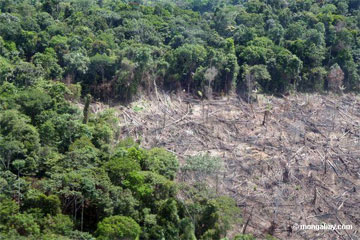 on. The CBD contains only qualified commitments as a result of developing countries? concern for sovereignty and development prerogatives, and the unwillingness of developed countries to financially support formal protection of biodiversity and habitat. Similar problems plague other global efforts to preserve habitat, such as forests and wetlands. These traditional, direct attempts to regulate biodiversity and habitat loss continue to come up short and the prospects for dramatic improvements to in situ preservation through them are dim.
 In contrast, the forthcoming COP-15 negotiations under the UN Framework Convention on Climate Change offer a unique and potentially very powerful opportunity to re-orient the financial and political incentives that have undermined global biodiversity and habitat agreements. The expected inclusion of a ?reduced emissions from deforestation and degradation? (REDD) mechanism offers a key chance to recognize an unusual alignment of interests in preservation of tropical forests that benefits biodiversity. REDD will ultimately create a market for trading carbon credits generated through avoiding deforestation (which currently releases far more carbon dioxide per year than complete compliance with the Kyoto Protocol would prevent). After an initial setup phase, REDD will likely include tradable offset credits that simultaneously generate more wealth for tropical forest nations than current destructive activities (such as clearing for agriculture) and allow developed nations to meet emissions limitations requirements more cheaply than domestic retrofitting could acheive.
 With financial incentives to conserve tropical forests, perhaps the hurdles to effective biodiversity preservation can be overcome. Further, biodiversity preservation is of fundamental importance for successful adaptation during climate change, particularly in poor areas of many developing countries, and is an appropriate design consideration in the climate regime. Indeed, many REDD proposals highlight potential biodiversity ?co-benefits? that could materialize. However, none offers a mechanism that would ensure their realization.
Tropical forests are among the most biodiverse ecosystems on earth, but not all are equal. Those forests that pose the most urgent priorities for preserving biodiversity are frequently fragmented and relatively small. Thus, the purely carbon-centered approach to REDD that currently dominates most proposals does not assure net benefits for biodiversity and may even prove worse than the status quo.
As I explain in a short article published today in the Carbon & Climate Law Review, if REDD is really going to materialize as a powerful force for biodiversity protection, its design must include a mechanism to identify and reward REDD projects that preserve biodiversity priority areas. Through designation of biodiversity-enhancing projects, together with added financial incentives for developing and investing in them, REDD could become the most effective tool yet for stemming the sixth mass extinction.


Full post as published by Biolaw Blog on September 21, 2009 (boomark / email).
Privacy Protection Act 42 USC 21A
Federal Newsroom Law
Dumb Foreign Laws
Stupid Laws of Other Countries
Truth In Lending Act
Consumer Loans and Consumer Credit Protection Act
AT&T International Roaming Charges, AT&T lawsuit
AT&T Faces International Roaming Charges Lawsuit
Preliminary Settlement Reached With Soleus International
Soleus International Reaches Preliminary Settlement of Class Action
imbee Data Collection
Industrious Kid, Inc. pays $130,000 civil penalty for violating the Children’s Online Privacy Protection Act.
Germantown Primary Care Associates, P.C.
Unlawfully collected fees refunded in Consumer Protection Act violation suit.
Anixter International Inc. 401(k) / ERISA Stock Fraud
Anixter International Inc. 401(k) / ERISA Stock Fraud
ValueClick
allegedly violated consumer protection laws by promising ‘free’ goods that where not actually free.

#1 Online Legal Resource

On 08-25 at 15:46PM
Acute perpendicular parking #NYPD #NYFD
On 08-18 at 22:18PM
Parallel parking gone bad. Too much gas UES NYC
On 08-18 at 21:41PM
UES NYC
On 08-18 at 21:25PM
Twitter suspends journalist critical of broadcast partner's coverage on dubious grounds @guyadams #nbcfail #twitterfail
On 07-30 at 17:57PM
Model example of 1st Amendment suppression by the People of New York City's Michael Bloomberg #OWS #NYPD
On 07-12 at 21:07PM
AG Holder lackadaisical on Operation in our Sites domain name seizures & RIAA lobbied free speech suppression @dajaz1
On 06-08 at 22:44PM
Why is the Catholic Church going to court over Obama contraception policy? @NewYorker commentary
On 05-31 at 10:08AM
Monks sue Louisiana for right to sell caskets made from forrest destroyed by Katrina
On 05-31 at 07:47AM
Are the abortion ultrasound laws headed for the Supreme Court?
On 05-15 at 21:52PM





Panellists See Critical Moment For International Policy On Biodiversity And Trade
Biodiversity: Bountiful Source For Cosmetics, But Needs Respect, Group Says
New L&C Law Scholarship: Waterbirds, the 2010 Biodiversity Target, and Beyond
McLaughlin on Land Trusts and Biodiversity
Year Ahead: Key Year For Biodiversity, Environment, Food Security, Traditional Knowledge
International Seed Treatys Goals Of Biodiversity, Food Security Tough To Implement
Panellists See High Impact Of Bilateral Trade Deals On Geneva Policymaking
BirdLife International (2008) State of the world’s birds: indicators for our changing world





 |
|
Contact Us | About Us | Celebrity Law Blog |
Our Partners | Disclaimer
| Law Blog Directory
| Law Jobs
| Law Tweets
| Oil Spill Video
All original material © 1999-2011 by USLaw.com. All other material, including Blog Directory feed content, are © by their respective copyright holders. |