
Home -> Law Blog Directory -> Academic Blogs -> Law at the End of the Day
(866) 635-2689 for Personal Injury or (866) 635-9402 for Criminal Defense
Find a Local Lawyer
Divorce (866) 635-6190
Personal Injury (866) 635-2689
Criminal Defense (866) 635-9402

Academic
: Law at the End of the DaySherry Roush on Tommaso Campanella's Philosophical Poems

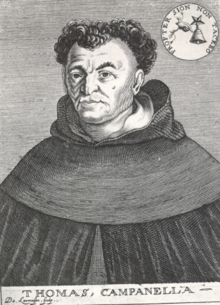
Scholars have cited Campanella's influence in religious and political realms. . . . For instance, Giorgio Spini has traced the promulgation of Campanella's religious ideals, not only to France and Germany, but even to American colonies, particularly to the Labadists of Northern Maryland and the to the Appalachian Shakers. Like the political thought of Noccolò Machiavelli--whom Campanella bitterly denounced--Campanella's work would come to be read and understood in ways that he could never have foreseen. Most notoriously, Campanella's writings purportedly inspired Vladimir Lenin's "Plan of Monumental Propaganda" (May 27, 1918). (Roush, supra, 2).

A contemporary of Giordano Bruno and Galileo, Tommaso Campanella (1568?1639) was a controversial philosopher, theologian, astrologer, and poet who was persecuted during the Inquisition and spent much of his adult life imprisoned because of his heterodox views. He is best known today for two works: The City of the Sun, a dialogue inspired by Plato?s Republic, in which he prophesies a vision of a unified, peaceful world governed by a theocratic monarchy; and his well-meaning Defense of Galileo, which may have done Galileo more harm than good because of Campanella?s previous conviction for heresy.
But Campanella?s philosophical poems are where his most forceful and undiluted ideas reside. His poetry is where his faith in observable and experimental sciences, his astrological and occult wisdom, his ideas about deism, his anti-Aristotelianism, and his calls for religious and secular reform most put him at odds with both civil and church authorities. For this volume, Sherry Roush has selected Campanella?s best and most idiosyncratic poems, which are masterpieces of sixteenth-century Italian lyrics, displaying a questing mind of great, if unorthodox, brilliance, and showing Campanella?s passionate belief in the intrinsic harmony between the sacred and secular. (Roush, supra, book jacket).

And this brings me back to the intimation, earlier above, of a rough semiotics to Campanella's philosophy--one that resonates in law. But this is semiotics in which the signification process becomes organic--not an external but an internal relation among sign, signifier and signified. Roush quotes John Headley for the connection between Campanella's philosophy to pansensism, the doctrine that posits that all things in nature are endowed with sense. "'In the pansensist universe language operates differently: words have a conjunctive power, identifying signifier and signified, being and thought, nature and perception; they operate as charms, possessing an incantational capacity when properly charged.'" (Roush, supra, at 21, citing John M. Headley, Campanella and the Transformation, 162). This comes close to an understanding of the power of the language of law, where words become both incantation and shape the ability of people to frame reality. Consider for example the fetish quality of the invocations necessary to commence an action to disregard the legal personality of a corporation and reach the assets of shareholders under U.S. law--See Franklin A. Gervurtz, "Piercing Piercing: An Attempt to Lift the Veil of Confusion Surrounding the Doctrine of Piercing the Corporate Veil," 76 Oregon Law Review 853, 854-58 (1997). A better, and perhaps more powerful example, was a recent NBC Newscast (March 20, 2011) in which Lester Holt talks with NBC News military analyst retired Gen. Barry McCaffrey about the then recent set of substantial U.S. military strikes against Libyan military targets under authority of a U.N. Security Council resolution permitting the establishment of a "no-fly" zone within Libyan airspace to "protect civilians." Mr. Holt asked retired General McCaffrey whether the United States was effectively at war with the Libyan government in the wake of these substantial air strikes. The General did not pause before explaining that the United States could not be at war--not because of the events on the ground in Libya, but because we couldn't be at war with Libya otherwise the War Powers Act of 1973 would have been invoked! Because the law had not been invoked, the United States was not at war. Incantation, words, law symbol now constrain the reality of events that though they occur before our eyes do not exist. This is the magic invoked by Campanella.
Campanella's life is itself a symbolic representation of the incantational semiotics that form the foundation of his philosophy, though not of course, its politics. See, Joseph Scalzo, "Campanella, Foucault and Madness in Sixteenth Century Italy," The Sixteenth Century Journal 21(3):359-372 (1990). Professor Roush describes the culminating months in 1600 when, with condemnation likely after a torture induced confession,
Campanella set fire to the straw mattress in his prison cell and pursued a plan to simulate a raving delirium. . . . Campanella spent one month raving, muttering or otherwise outwardly demonstrating an utter loss of reason to any official who saw him. Meanwhile he conversed rationally with a prisoner friend. . . . For months Campanella somehow managed his posture of simulated madness through tortures, surprise visits and surreptitious observations. . . . On June 4 and 5, Campanella underwent the veglia (wake). By Campanella's time, the wake was a relatively rare form of torture, deemed sufficiently cruel that it was universally recognized as intolerable enough to provoke confession even from the most recalcitrant of subjects. . . . After thirty-six continuous hours of torture without sleep, the exactors of punishment cut loose his ropes and declared him insane. As soon as Campanella heard these words, he was said to have turned to one of his torturers, Giacomo Ferraro, and hissed in his ear: "Che si pensavano che io era coglione, che volvera parlare? (What did you think, that I was a dumbass, that I wanted to talk?). (Roush, supra, 6-8, link added).

Roush reminds us that "'The true poet,' Campanella summarized in the tenth chapter of his Poetics, 'is the one who teaches and says very great and prophetic things for the good of the readers.'". (Roush, supra, at 15). What are these great and prophetic things? Campanella means to instruct in religion, philosophy, magic, and politics, all aspects of the same reality, its invocation and articulation. Campanella understood words in their semiotic sense and with a sensibility that would be developed later by Foucault and Nietzsche. What he calls the magic of words, their power on utterance, reflects a view of representational reality in which the representation becomes more powerful than the thing itself in ordering the perception of those affected by them. Thus in Poem 44 On the Same [Against Sophists, Hypocrites, Heretics, and False Miracle Workers] Campanella sings: "Nessun ti verrà a dire: 'Io son sofista'; ma di perfidie la scuola più fina larve e bugie sottil dà per dottrina, e vuol esser tenuta evangelista. . . . onde serran le bocche altrui, e si spolglia ognor il libro, e veste di menzogna, citato in tesatimon contro lo voglia." (Roush, supra, at 120-123 ("No one will come to you saying: 'I am a sphist"; but the finest school of treachery passes shadows and subtle lies for doctrine and wants to be esteemed an evangelist. . . .whence they seal the mouths of others, yet spoil the book by wrapping it in a veil of lies cited in testimony against their will."")).
I will end by focusing very briefly here on Campanella's politics, in their semiotic and incantational sense to suggest that the power of the pronouncement (the verse) is meant to activate the conception and give rise to the reality to be conveyed, and by that conveyance, planted into the mind of the recipient.
True to the spirit of the times. Campanella both sought to liberate himself and in the process managed to replicate, dominant forms and patterns of thinking. That is the substance of Poem No. 3, which mimics the "Credo" and which Roush describes as both fundamental to the understanding of the philosophy and tedious (supra at 19). The Campanella credo is Platonic and grounded in a hierarchy of reality in which value and position are intertwined. It suggests the perverseness of existence--where the power to sin is the signature of the lack of power, of impotence ("poter pecare è impotenza vera", supra, 46) and power is derivative, grounded in the framing element of reality (Vero potrere eminenza è dell'ente, id.). Yet it also suggests that belief and personal action, rather than allegiance to an institutional structure overseen by a priestly (or other sort of managerial) class are the measure of conformity to "right" ("Talché, barbare genti [ed idolatre], se operaste giustizia naturale, non siete esenti dalle sanrte squandre," id., 48 lines 58-60). But also present is the connection with the forms of institutional power that have shaped Campanella's reality--in this case the late medieval Church just then dealing with the realities of the substantial loss of spiritual and temporal power through Reformation. Consider the supplication: Deh, Signor, io vaneggio; aita, aita! pria che del senno il tempio divenga di stoltizia una meschita" (Poem 73 Madrigal 1 "Orazioni tre in salmondia mertafisicale congiunte insieme", supra, 140 ("Oh Lord, I rave deliriously. Help, Help! before the temple of my intellect becomes a mosque of foolishness.") the entire Madrigal is worth reading for its irony and depth).
Thus, the institution is acknowledged, and the objectives becomes, as in every institutional framework since (whether temporal, ecclesiastical or otherwise), the fight against "sofisti, ipocriti e tiranni" (id., line 67). but the system survives (id., lines 94-96). Nietzsche hovers in the background, though centuries off. Thus, for example, Poem No. 6 ("The Way to Philosophize") speaks to go back to the original to avoid the error of what centuries later would become Nietzsche's "priestly type." Thus the admonition at the end of Poem 20 ("To Christ Our Lord", supra 70-73): "If you return to earth, comer armed, Lord, because enemies are preparing other crosses--not Turks, not Jews--but those of your own kingdom. (Id., lines 12-14 "Se torna in terra, armato vien', Signore, ch'altre croci apparécchianti i nemici, non Turchi, non Giudei: que' del tuo regno.").
I leave you with Poem 35 to ponder (Roush, supra, 110-113):
Che 'l principe tristo non è mente della Repubblica sua
Mentola al comun corpo è quel, non mente,This poem suggests inversion--of the mind and body, of the head and the tail, of gesture and action of pleasure and profit, of cause and effect. The binaries build on the foundation of the physical and political body, and of the pleasures of onanism and the obligations of fecundity. Nietzsche again hovers in the background, though many centuries off. That inversion goes to the heart of the philosophy of Campanella. Roush's translation is superb; so is her analysis. For her commentary on the translation see Roush, supra 29-34).
che da noi, membra, a sé tutte raccoglie
sostanze e guadi, e non fatiche e doglie:
ch'esausti n'ha, come cicale spente.Almen, come Cupido, dolcemente
ci burlasse, che 'n grembo della moglie
getta il sangue e 'l vigor,vche da noi toglie,
struggendo noi, per far novella gente.Ma, con inganno spiacevole, in vaso
li sparge o in terra, onde non puoi sperare
alcuna ricompensa al mortal caso.Corpo meschin, cui mente ha da guidare
piccola in capo piccolin, ch'ha naso,
ma non occhi, né orecchie, né parlare.

Full post as published by Law at the End of the Day on March 26, 2011 (boomark / email).

#1 Online Legal Resource

On 08-25 at 15:46PM
Acute perpendicular parking #NYPD #NYFD
On 08-18 at 22:18PM
Parallel parking gone bad. Too much gas UES NYC
On 08-18 at 21:41PM
UES NYC
On 08-18 at 21:25PM
Twitter suspends journalist critical of broadcast partner's coverage on dubious grounds @guyadams #nbcfail #twitterfail
On 07-30 at 17:57PM
Model example of 1st Amendment suppression by the People of New York City's Michael Bloomberg #OWS #NYPD
On 07-12 at 21:07PM
AG Holder lackadaisical on Operation in our Sites domain name seizures & RIAA lobbied free speech suppression @dajaz1
On 06-08 at 22:44PM
Why is the Catholic Church going to court over Obama contraception policy? @NewYorker commentary
On 05-31 at 10:08AM
Monks sue Louisiana for right to sell caskets made from forrest destroyed by Katrina
On 05-31 at 07:47AM
Are the abortion ultrasound laws headed for the Supreme Court?
On 05-15 at 21:52PM





Q & A: Work-Related Problems With Future Daughter-In-Law (Hartford Courant)
Philosophy Made Easy Through Simple Poems!
N.J. prisons confiscate collection of prisoner poems and stories





 |
|
Contact Us | About Us | Celebrity Law Blog |
Our Partners | Disclaimer
| Law Blog Directory
| Law Jobs
| Law Tweets
| Oil Spill Video
All original material © 1999-2011 by USLaw.com. All other material, including Blog Directory feed content, are © by their respective copyright holders. |