
Home -> Law Blog Directory -> Practice Management Blogs -> What About Clients?
(866) 635-2689 for Personal Injury or (866) 635-9402 for Criminal Defense
Find a Local Lawyer
Divorce (866) 635-6190
Personal Injury (866) 635-2689
Criminal Defense (866) 635-9402

Practice Management
: What About Clients?Boundary Flare-Up: U.S. Supreme Court Revisits Constitutional Limitation on States? Power to Tax -- MeadWestvaco Corp. v. Illinois Dep?t of Revenue.
By Dan Hull
By Julie E. McGuire and Thomas C. Welshonce
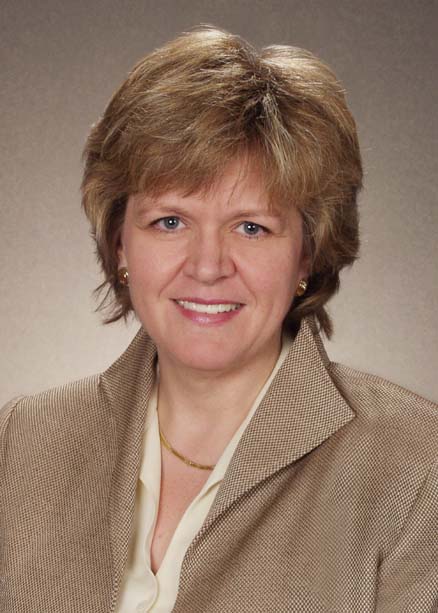
Julie McGuire graduated first in her class from Carnegie Mellon University (B.S. Management Science and Mathematics, 1980), and first in her class from the Duquesne Law School (J.D., 1985), where she was an Editor of the Duquesne Law Review. A highly-respected corporate tax lawyer with an international practice, she is also a Certified Public Accountant. Tom Welshonce, a 2004 Order of the Coif graduate of the University of Pittsburgh's law school, was the Lead Articles Editor of The Journal of Law and Commerce. He focuses on multi-jurisdictional transactions, and assists with ADR in the U.S. and abroad. McGuire and Welshonce are lawyers with Hull McGuire PC.
This morning, January 16th, the United States Supreme Court will hear oral arguments in the case of Mead Corp. v. Illinois Dep?t of Revenue, 861 N.E.2d 1131 (Ill. App. Ct. 2007), appeal denied, 862 N.E.2d 235 (Ill. 2007), cert. granted sub nom. MeadWestvaco Corp. v. Illinois Dep?t of Revenue, 128 S. Ct. 29 (U.S. Sept. 25, 2007) (No. 06-1413). The Court has granted certiorari in only a handful of tax cases this term. In MeadWestvaco, it will revisit its long line of cases defining constitutional boundaries on the States? power to tax corporate income. MeadWestvaco will be the first case since the Court?s 5-4 decision in Allied-Signal, Inc. v. Director, Div. of Taxation, 504 U.S. 768 (1992) to mark and enforce the constitutional boundaries at stake.
The Boundaries: ?Unitary Business? Or ?Operational? Function

Businesses no longer operate from a single location in a single state; they now operate globally. Physical, geographical state borders no longer define where a state?s power to tax ends. The question: what part of a company?s global income may be taxed by (or ?apportioned? to) a particular state, when most of the income is earned outside of the state?s traditional borders? The struggle has always had two sides: states want to tax a piece of all of a taxpayer?s income, and taxpayers want to pay tax only on income that can be attributed to benefits received by the taxing state. The need for neutral boundary-setting now is critical.
The Supreme Court has long held, under the due process clause and commerce clause of the Constitution, that the entire net income of
Full post as published by What About Clients? on January 16, 2008 (boomark / email).
Selection of State Supreme Court Judges
How State Court Judges are Selected
California Supreme Court Proposition 8 Decision
Court Rejects Challenges to Proposition 8, but Finds Marriages Valid
Is Barack Obama a Natural Born Citizen?
Wrotnowski v. Bysiewicz (Supreme Court): Does Obama meet the constitutional requirements to be President
Unwed Fathers' Rights in Adoption
Landmark Cases in Adoption Law Shape Law with respect to Unwed Fathers
Law Enforcement and Criminal Justice Career Choices
Descriptions of law enforcement occupations
Power of Attorney and Living Wills for the aged
Options for caring for aging parents
Illinois Ground Beef Recalled
due to Possible E. coli Contamination
Illinois Residents
Exposed to Potentially Carcinogenic Drinking Water
University of Illinois Medical Center
Potential $14 Million in Malpractice Settlements
Immigration and Customs Enforcement
alleging government agencies and officials violated immigrant workers' constitutional rights.
Rite Aid Corp. and Eckerd Corp.
allegedly failed to pay overtime to assistant store managers.
Cilantro
Recalled in 5 States

#1 Online Legal Resource

On 08-25 at 15:46PM
Acute perpendicular parking #NYPD #NYFD
On 08-18 at 22:18PM
Parallel parking gone bad. Too much gas UES NYC
On 08-18 at 21:41PM
UES NYC
On 08-18 at 21:25PM
Twitter suspends journalist critical of broadcast partner's coverage on dubious grounds @guyadams #nbcfail #twitterfail
On 07-30 at 17:57PM
Model example of 1st Amendment suppression by the People of New York City's Michael Bloomberg #OWS #NYPD
On 07-12 at 21:07PM
AG Holder lackadaisical on Operation in our Sites domain name seizures & RIAA lobbied free speech suppression @dajaz1
On 06-08 at 22:44PM
Why is the Catholic Church going to court over Obama contraception policy? @NewYorker commentary
On 05-31 at 10:08AM
Monks sue Louisiana for right to sell caskets made from forrest destroyed by Katrina
On 05-31 at 07:47AM
Are the abortion ultrasound laws headed for the Supreme Court?
On 05-15 at 21:52PM





Boundary Flare-Up: The Supreme Court Revisits Constitutional Limitation on States Power to Tax
Supreme Court Hears Oral Argument Today in MeadWestvaco Corp. v. Illinois Department of Revenue
April 15: Supreme Court Decides Two Tax Cases
Supreme Court rules in tax cases
Supreme Court rules in tax cases - taxation of out of state companies, taxpayer seeking refund





 |
|
Contact Us | About Us | Celebrity Law Blog |
Our Partners | Disclaimer
| Law Blog Directory
| Law Jobs
| Law Tweets
| Oil Spill Video
All original material © 1999-2011 by USLaw.com. All other material, including Blog Directory feed content, are © by their respective copyright holders. |