Home -> Law Blog Directory -> Litigation Blogs -> The Gavel
(866) 635-2689 for Personal Injury or (866) 635-9402 for Criminal Defense
Find a Local Lawyer
Divorce (866) 635-6190
Personal Injury (866) 635-2689
Criminal Defense (866) 635-9402

Litigation
: The GavelIdeas, Trends in a Post-?Citizens United? Era
By Peter Hardin

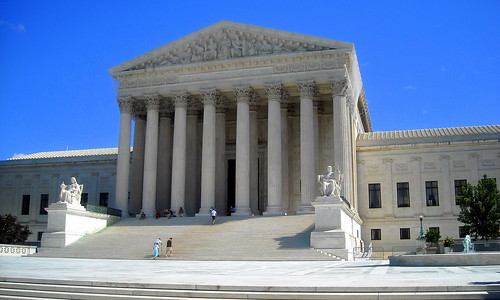 “Democracy” dollars? New court attacks on surviving campaign finance restrictions? As players inside and outside of politics shape responses to the Supreme Court’s Citizens United ruling, newspapers documented one legislative proposal and one litigation trend, both tied to a changing world of campaign finance regulation.
In the Wall Street Journal, law professor Bruce Ackerman of Yale and Democratic Rep. David Wu of Oregon called for giving ordinary citizens the financial ability to wield greater clout in the political marketplace. They propose a refundable $50 tax credit that citizens could give to federal campaigns in presidential election years, with less in off-years. Their thinking about these proposed “democracy” dollars:
“Democracy dollars is no panacea. It does not promise a political utopia purged of special interests. It simply allows ordinary Americans to compete effectively with corporations, giving them a realistic chance to shape the political debate long before they cast their ballots in November.”
In USA Today, reporter Fredreka Schouten chronicled “a series of court challenges coast-to-coast [that] could unravel other campaign-finance restrictions ? including limits on contributions to political groups.” In a case set for argument before a Washington, D.C. appeals panel Wednesday, judges will be asked whether to uphold a $5,000 cap on annual donations by an individual to an independent political group, SpeechNow.
Steve Simpson, a lawyer with the Institute for Justice–a libertarian public-interest law firm–told the newspaper, “I’m certainly emboldened” by the high court’s decision in Citizens United. The Institute is representing SpeechNow. More details about that case were reported by SCOTUSblog in a post entitled, “First Sequel to Citizens United.”
In Maryland, meanwhile, some lawmakers were preparing a legislative package to respond to the decision, the Baltimore Sun reported. State Senate President Thomas V. Mike Miller, who was not part of that effort, raised concerns publicly that the ruling could lead to corporate influence on court decisions through big spending on judicial elections. Miller said that should “shock the conscience of the public.”
Other dispatches or opinion about last week’s decision included Clarence Page in the Chicago Tribune on “How companies became ‘persons’;” Howard Schweber in Huffington Post on “Citizens United: Less Important, More Important, and (Even) Weirder Than You Think;” and Ronald Dworkin in the New York Review of Books on “The ‘Devastating’ Decision.” You also can check The “Daily Show” for its take on the “Supreme Corp” by clicking here.
Full post as published by The Gavel on January 27, 2010 (boomark / email).
Washington Post WPO Securities Fraud
Washington Post WPO
United Airlines Discriminates Against Blind Passengers
United Airlines Discriminates Against Blind Passengers
Washington Post 401(k) / ERISA Stock Fraud
Washington Post 401(k) / ERISA Stock Fraud
Louisiana Citizens Reaches $23 Million Settlement With Homeowners
Louisiana Citizens Reaches $23 Million Settlement With Homeowners
John Vermillion and Associates LLC et al.
allegedly misrepresented themselves as qualified financial advisers to sell living trusts and exploit senior citizens.
PTDS class action
Veterans Post Traumatic Stress Disorder Class Action

#1 Online Legal Resource

On 08-25 at 15:46PM
Acute perpendicular parking #NYPD #NYFD
On 08-18 at 22:18PM
Parallel parking gone bad. Too much gas UES NYC
On 08-18 at 21:41PM
UES NYC
On 08-18 at 21:25PM
Twitter suspends journalist critical of broadcast partner's coverage on dubious grounds @guyadams #nbcfail #twitterfail
On 07-30 at 17:57PM
Model example of 1st Amendment suppression by the People of New York City's Michael Bloomberg #OWS #NYPD
On 07-12 at 21:07PM
AG Holder lackadaisical on Operation in our Sites domain name seizures & RIAA lobbied free speech suppression @dajaz1
On 06-08 at 22:44PM
Why is the Catholic Church going to court over Obama contraception policy? @NewYorker commentary
On 05-31 at 10:08AM
Monks sue Louisiana for right to sell caskets made from forrest destroyed by Katrina
On 05-31 at 07:47AM
Are the abortion ultrasound laws headed for the Supreme Court?
On 05-15 at 21:52PM





Bainbridge, et al. on Citizens United and Corporate Personhood
Supplemental Briefs in Citizens United
"Should Ted Olson Argue in Citizens United"
"The Long Vigil for Citizens United"
Jumping the Gun on Citizens United
Trends that general counsel spot and some risks associated with bandwagons





 |
|
Contact Us | About Us | Celebrity Law Blog |
Our Partners | Disclaimer
| Law Blog Directory
| Law Jobs
| Law Tweets
| Oil Spill Video
All original material © 1999-2011 by USLaw.com. All other material, including Blog Directory feed content, are © by their respective copyright holders. |