Home -> Law Blog Directory -> International Law Blogs -> Excess Copyright
(866) 635-2689 for Personal Injury or (866) 635-9402 for Criminal Defense
Find a Local Lawyer
Divorce (866) 635-6190
Personal Injury (866) 635-2689
Criminal Defense (866) 635-9402

International Law
: Excess CopyrightLonger Copyright Term and Disincentives
By Howard Knopf, Esq.

Here's an economics paper by Francisco Alcalá (Universidad de Murcia) and Miguel González-Maestre (Universidad de Murcia) that is getting much attention and that concludes that longer copyright terms may actually be a disincentive to new production by emerging artists.
Here's the abstract:
Abstract Promoting high-quality artistic creation requires sorting the most talented people of each generation and developing their skills. This paper takes a professional-career perspective in analyzing the determinants of artistic creation. The paper builds an overlappinggenerations model of artists with three features: (i) the number of highly talented artists in a given period is positively linked to the number of young artists starting the career in the previous period; (ii) artistic markets are superstar markets; iii) promotion expenditures play an important role in determining market shares. In this framework, the paper analyzes the consequences for high-quality artistic creation of changes in the length of the copyright term, increases in market size, and progress in some communication technologies. It is shown that increasing superstars? returns do not always increase the expected return to starting an artistic career. As a result, in the long run, longer copyrights do not always stimulate artistic creation.
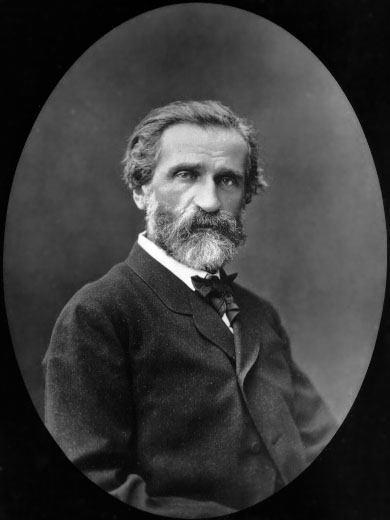
For those who actually would like to see some logic rather than lobbying on the issue of copyright as an incentive to creativity, there's also a wonderful book published in 2003 by a brilliant elder statesman of industrial economics and the economics of technological change and IP named F.M. Scherer entitled Quarter Notes and Bank Notes: The Economics of Music Composition in the Eighteenth and Nineteenth Centuries about the rise of copyright in the how copyright protection may have actually discouraged production - and apparently did in the case of Verdi, which he looks at very closely. Not that Verdi was unproductive - he just slacked off a lot as he got quite rich due to the ever increasing power of copyright.
I leave it to her fans to decide if the artistic legacy of Britney Spears, another example of a superstar who benefits from copyright , is in decline or whether the incentive theory works for her... and if there's any correlation with her royalties.
HK

Full post as published by Excess Copyright on November 16, 2009 (boomark / email).
Copyright Lawsuits: Critical Issues Before Filing Copyright
Federa Rule 11(b) Considerations
Pesticides
Long-Term Exposure Linked to Diabetes
Long-Term Insurance Suit
Settled for $15 Million
UnumProvident
for allegedly denying long-term disability claims.
Spike Lee and Showtime
Settlement reached in script copyright infringement lawsuit.
Joke Book
Judy Brown and publishers pay undisclosed settlement to comedians and talkshow celebrities for copyright infringement.
ASMP and Other Visual Artists File Class Action Lawsuit Against Google
Google Faces Class Action for Copyright Infringement

#1 Online Legal Resource

On 08-25 at 15:46PM
Acute perpendicular parking #NYPD #NYFD
On 08-18 at 22:18PM
Parallel parking gone bad. Too much gas UES NYC
On 08-18 at 21:41PM
UES NYC
On 08-18 at 21:25PM
Twitter suspends journalist critical of broadcast partner's coverage on dubious grounds @guyadams #nbcfail #twitterfail
On 07-30 at 17:57PM
Model example of 1st Amendment suppression by the People of New York City's Michael Bloomberg #OWS #NYPD
On 07-12 at 21:07PM
AG Holder lackadaisical on Operation in our Sites domain name seizures & RIAA lobbied free speech suppression @dajaz1
On 06-08 at 22:44PM
Why is the Catholic Church going to court over Obama contraception policy? @NewYorker commentary
On 05-31 at 10:08AM
Monks sue Louisiana for right to sell caskets made from forrest destroyed by Katrina
On 05-31 at 07:47AM
Are the abortion ultrasound laws headed for the Supreme Court?
On 05-15 at 21:52PM





Brad Fox on Reducing the Term of Copyright
Ryznar: The Tax Disincentives for Married Women
Who knew Not 14, but 5 years is the ideal copyright term.
Late Recap of the Southwestern Conference About Copyright Reform, Panel 1
British Government Announces Support for Copyright Term Extension





 |
|
Contact Us | About Us | Celebrity Law Blog |
Our Partners | Disclaimer
| Law Blog Directory
| Law Jobs
| Law Tweets
| Oil Spill Video
All original material © 1999-2011 by USLaw.com. All other material, including Blog Directory feed content, are © by their respective copyright holders. |