Home -> Law Blog Directory -> Academic Blogs -> Law at the End of the Day
(866) 635-2689 for Personal Injury or (866) 635-9402 for Criminal Defense
Find a Local Lawyer
Divorce (866) 635-6190
Personal Injury (866) 635-2689
Criminal Defense (866) 635-9402

Academic
: Law at the End of the DayDeveloping a Coherent Transnational Jurisprudence of Ethical Investing: The Norwegian Sovereign Wealth Fund Ethics Council Model Part XV
This Blog Essay site devotes every February to a series of integrated but short essays on a single theme. The Ruminations Series in 2009 produced a series of aphoristic (?????????) essays, meant to provoke thought rather than explain it. The hope was that, built up on each other, the series would provide a matrix of thoughts that together might lead the reader in new directions. Ruminations continue to be produced form time to time. For 2010, this site introduced a new series--Business and Human Rights. The series took as its starting point the issues and questions raised by John Ruggie, the United Nations Special Representative of the Secretary-General (SRSG) on business and human rights, in a global online forum.
For 2011, this site introduces a new series of integrated essays--Developing a Coherent Transnational Jurisprudence of Ethical Investing: The Norwegian Sovereign Wealth Fund Ethics Council Model. The object of this series to to consider the work of the Ethics Council of the Norwegian Sovereign Wealth Fund. The thesis of this series is this: The Norwegian Sovereign Wealth Fund (NSWF ) investment program is grounded in the application of a set of Ethical Guidelines adopted by the Storting (the Norwegian Legislature) and enforced through an Ethics Council charged with determining whether a company should be excluded from investment by the NSWF. The work of the Ethics Council has produced the beginnings of a coherent jurisprudence of ethics for corporate investment. That jurisprudence may contribute significantly both to the development of transnational social norm standards and affect the way domestic corporate law is understood. This is Part II of the series.

5. Corruption
1. Recommendation of November 15, 2007, on exclusion of the company Siemens AG, [13.03.2009].
The Council on Ethics recommended the company for exclusion the 15th of November 2007. Please find the recommendation here. This recommendation was followed by a letter the 3rd of September 2008. Read the letter here.
Summary: The exclusion on the grounds of gross corruption was not used until 2007 when there were widespread and very public allegations of corruption from the Germany Company Siemens in its operations throughout the world. On the note of gross corruption the Council states ?When there is an unacceptable risk that the Fund through its investment in a company may contribute to gross corruption, the Council should recommend the exclusion of the company from the Fund?s portfolio. The Council?s assessment is twofold. First, the criteria of gross corruption must be met. Second, there must be an unacceptable risk that the use of gross corruption will continue in the future? giving the following criteria ?Gross corruption exists if a company, through its representatives, a) gives or offers an advantage ? or attempts to do so ? in order to unduly influence: i) a public official in the performance of public duties or in decisions that may confer an advantage on the company; or ii) a person in the private sector who makes decisions or exerts influence over decisions that may confer an advantage on the company, and b) the corrupt practices as mentioned under letter a) are carried out in a systematic or extensive way?.
After court trials in Italy, the U.S., Singapore, Germany, and Norway (with accusations in over 25 states) the Council took into account the judicial practices of each nation and came to the conclusion to exclude the company on systemic negligence by the company in reacting to bribery from individuals working for the company to state officials in nations around the world. This is one of the few cases where direct court cases were used and cited for violations of domestic law. The Council takes into account the standing laws that are accused to have been broken in each nation in question and then basis its decision of off that. Additionally the Council also integrates international customary law and Norwegian law where applicable.
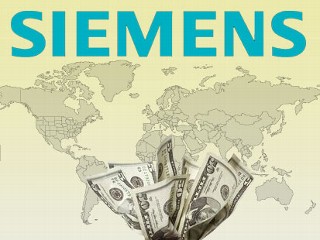
("The scheme, as laid out in court documents, worked very simply: The German company and its subsidiaries, which produce light bulbs, wind turbines. trains and more, made more than 4,000 payments, totaling $1.4 billion, to government officials around the globe.")
The Council sustains that since November 2007 the scale of uncovered corruption at Siemens has increased significantly, something that is shown through investigations of new units in several new countries. . . . . Since the corruption case was revealed, Siemens has introduced several measures that may be expected to contribute to reducing the risk of further corruption in the company. . . . The external analysis of compliance procedures and control mechanisms, and the company?s centralization of the compliance organisation seem positive. . . . Furthermore, some replacements have been made among management and board members. (Spt. 3 letter at 4-5).
The Council also makes a note of the fact that the new corruption revelations did not come as a result of internal investigations where the company itself notified the authorities, but because of the public prosecutor?s raid at Siemens? headquarters in Munich. The Council finds that the company has shown a passive attitude in face of the detected corruption. It has only confessed insofar as it has been exposed in the media. Only after the SEC initiated a formal investigation of the company did Siemens feel obliged to act and implement various anti-corruption measures. It seems to be a characteristic trend that Siemens only starts the clean-up once it is forced to, and not on its own initiative. (Id., 5-6).

1. Company subject to investigation
a. Name: Siemens http://www.siemens.com/entry/cc/en/
b. form of organization (corporation, Partnership, etc.): Public Company
c. home country: Germany
d. countries (exchanges) where shares are traded: FWB, NYSE, FTSE
e. largest shareholders (individual, state owned enterprise, etc): FMR LLC, FISHER INVESTMENTS, INC., Tradewinds Global Investors, LLC, WELLINGTON MANAGEMENT COMPANY, LLP, Ameriprise Financial, Inc.
f. form of investment by the Norway SWF fund: Equity2. Chronology
a. Date complaint filed: 5 March 2007
b. Date complaint resolved by the Ethics Council: 15 November 20073. Complainant
a. If the state, the office from which the reference was made: The ruling appears to be based on the sole decision of the Council who made the decision following significant media hype and investigations by over 25 countries. It is unclear whether the Council had the intent of conducting an independent investigation, or if it bowed to public pressure.
b. If not the state the name and affiliation and home state of the complainant entity: Possibly to wide spread media coverage, outside political views of the Norwegian Government not wanting to be seen aiding Siemens, or foreign bodies.4. Complaint
a. Action constituting violation: Patter of bribery and corruption of public officials in numerous countries from 1992 to 2007 with complicity within the company and little oversight or penalties done by the company.
b. ?Legal? basis of violation: The Council?s own guidelines, numerous outstanding cases against the company, violation of law in many nations that the company operates in.5 Determination
a. Council recommendation (for example divest, retain, wait): Exclude
b. Legal basis for the determination: Corruption
c. Underlying legal basis (Norwegian law, international treaty, customary international law principle, soft law standard, etc.): This is one of the few cases where it appears that the Council is directly using hard/domestic law.6. Basis of Determination
a. standard of decision (rule or test etc.): Possibly setting the foundation for more cases in corruption, the Council is attempting to solidify its basis for what constitutes gross corruption.
b. Use of prior Ethics Council recommendations as precedent or as persuasive:First of its kind.
c. Use of case law of other courts or bodies: The legal battles being fought in Germany, Italy, Norway, Singapore (all with different laws on corruption) along with the SEC investigation in the U.S. Additionally actions by Transparency International and other NGO?s had influence in the case by the Council.d. Reliance on other materials (identify): Transparency International already cut off Siemens membership and numerous NGO?s were reporting on Siemens. ?The White Paper preceding the Ethical Guidelines allows for the exclusion of companies as a precautionary measure in cases that are very serious from an ethical viewpoint? (Para. 7 Pg. 3). Questions that still go unanswered is: Should the company be found liable because of the actions of individuals (is the company as a whole guilty of corruption, complicity, or negligence), corruption because evident in Siemens over fifteen years prior to the judgment, why was it 2007 that the Council chose exclusion, what happens to companies that are similar to Siemens, what is the definition of bribery, and does the legality in the host nation as depict what is bribery and what is not (i.e. campaign contributions that in some states would be illegal and seen as playing against democracy).
e. Rationale: After significant amounts of evidence compiled against the company for over the last decade the decision was the exclude Siemens from the Fund.
1. Company subject to investigation
a. Name: Siemens http://www.siemens.com/entry/cc/en/
b. form of organization (corporation, Partnership, etc.): Public Company
c. home country: Germany
d. countries (exchanges) where shares are traded: FWB, NYSE, FTSE
e. largest shareholders (individual, state owned enterprise, etc): FMR LLC, FISHER INVESTMENTS, INC., Tradewinds Global Investors, LLC, WELLINGTON MANAGEMENT COMPANY, LLP, Ameriprise Financial, Inc.
f. form of investment by the Norway SWF fund: Revoked
2. Chronology
a. Date complaint filed: 5 March 2007
b. Date complaint resolved by the Ethics Council: 15 November 2007
c. Date filed for reevaluation: 5 May 2008
d. Date reevaluated: 3 September 2008
3. Complainant
a. If the state, the office from which the reference was made: The evaluation of exclusion was made on request of the company to the Council, using Point 4.6, by the Ministry of Finance to see if measures that were instigated by the company were effective enough in combating corruption.
b. If not the state the name and affiliation and home state of the complainant entity: New information and oversight by the company.
4. Complaint
a. Action constituting violation: Patter of bribery and corruption of public officials in numerous countries from 1992 to 2007 with complicity within the company and little oversight or penalties done by the company.
b. ?Legal? basis of violation: At the time of the ruling cases were still pending in courts around the world and an SEC investigation was in the process of being conducted. Siemens was in the process of reforming its corporate placement and many executive had left by that time.
5 Determination
a. Council recommendation (for example divest, retain, wait): Continue to exclude
b. Legal basis for the determination: Corruption
c. Underlying legal basis (Norwegian law, international treaty, customary international law principle, soft law standard, etc.): This is one of the few cases where it appears that the Council is directly using hard/domestic law, now continuing that with the possibility of future corruption.
6. Basis of Determination
a. standard of decision (rule or test etc.): Possibly setting the foundation for more cases in corruption, the Council is attempting to solidify its basis for what constitutes gross corruption.
b. Use of prior Ethics Council recommendations as precedent or as persuasive: First of its kind decision.
c. Use of case law of other courts or bodies: The legal battles being fought in Germany, Italy, Norway, Singapore (all with different laws on corruption) along with the SEC investigation in the U.S. Additionally actions by Transparency International and other NGO?s had influence in the case by the Council.
d. Reliance on other materials (identify): The company?s own website, annual reports, and court proceedings.
e. Rationale: After significant amounts of evidence compiled against the company for over the last decade the decision was the exclude Siemens from the Fund. Not enough has changed to warrant investment.

Full post as published by Law at the End of the Day on February 15, 2011 (boomark / email).
The Reserve Fund's Primary Fund
401(k) / ERISA Stock Fraud
The Reserve Fund's Primary Fund
RFIXX
Alabama Restaurant Association Hires Legal Council to Help Members Damaged by BP Oil Spill
Alabama Restaurant Association Hires Legal Council to Help Members Damaged by BP Oil Spill>
Radio Transmitters
for Model Aircrafts Recalled
FedEx
Ground Business Model Wins Class Action in Washington
Probation User Fees
Clark County Council pays $1.1 million settlement after misappropriating funds.

#1 Online Legal Resource

On 08-25 at 15:46PM
Acute perpendicular parking #NYPD #NYFD
On 08-18 at 22:18PM
Parallel parking gone bad. Too much gas UES NYC
On 08-18 at 21:41PM
UES NYC
On 08-18 at 21:25PM
Twitter suspends journalist critical of broadcast partner's coverage on dubious grounds @guyadams #nbcfail #twitterfail
On 07-30 at 17:57PM
Model example of 1st Amendment suppression by the People of New York City's Michael Bloomberg #OWS #NYPD
On 07-12 at 21:07PM
AG Holder lackadaisical on Operation in our Sites domain name seizures & RIAA lobbied free speech suppression @dajaz1
On 06-08 at 22:44PM
Why is the Catholic Church going to court over Obama contraception policy? @NewYorker commentary
On 05-31 at 10:08AM
Monks sue Louisiana for right to sell caskets made from forrest destroyed by Katrina
On 05-31 at 07:47AM
Are the abortion ultrasound laws headed for the Supreme Court?
On 05-15 at 21:52PM





Desai & Dharmapala on Taxing Sovereign Wealth
The Taxation of Sovereign Wealth Funds
Sovereign Wealth Funds and Activism
Half of Sovereign-Wealth Fund Deals Involve Majority Stakes
Sovereign Wealth Fund Investment in the U.S. - An Update





 |
|
Contact Us | About Us | Celebrity Law Blog |
Our Partners | Disclaimer
| Law Blog Directory
| Law Jobs
| Law Tweets
| Oil Spill Video
All original material © 1999-2011 by USLaw.com. All other material, including Blog Directory feed content, are © by their respective copyright holders. |