Home -> Law Blog Directory -> Litigation Blogs -> The Gavel
(866) 635-2689 for Personal Injury or (866) 635-9402 for Criminal Defense
Find a Local Lawyer
Divorce (866) 635-6190
Personal Injury (866) 635-2689
Criminal Defense (866) 635-9402

Litigation
: The GavelAnxious Predictions on Citizens United
By Peter Hardin
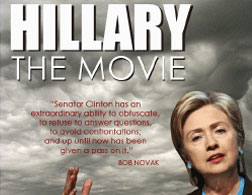 A widely anticipated campaign finance regulation decision still sits somewhere behind closed doors at the U.S. Supreme Court, but the case has prompted torrents of speculation about its impact and how it could change the 2010 political landscape. A decision could be issued this week.
Citizens United v. Federal Election Commission was re-argued Sept. 9, after the high court expanded the initial, narrow scope of the case and asked the blockbuster question of whether to overturn longstanding bans on election spending from corporate and union treasuries.
The ruling could reshape how corporations spend political money in this year’s mid-term congressional elections, and it ultimately could affect spending on judicial elections in states where judges are elected.
If the Roberts court chooses to treat corporate political spending as protected speech, Monica Youn of the Brennan Center for Justice wrote in the Los Angeles Times, voters stand to lose out to corporations in the political process:
“Businesses and other big-money players will spend billions either hyping their preferred candidates or running attack ads against elected officials who don’t support their preferred agenda. Voters will be forced into a couch-potato role, mere viewers of the electoral spectacle bought and paid for by wealthy companies.”
Sen. Russell Feingold, D-Wisconsin, similarly fears a far-reaching and adverse decision. He was an architect of the McCain-Feingold campaign finance law in 2002, which a Supreme Court decision could scale back. Wisconsin Radio Network quoted Feingold as saying about the Supreme Court:
“If they overturn a hundred years of laws, it means that corporations or unions can just open their treasuries…and just completely buy up all the television time, and drown out every else’s voices.”
The New York Times has offered a different take, reporting that a mix of other court decisions relaxing limits on campaign spending–and a deadlock among Federal Election Commission members–mean the 2010 election season will already bring much more freedom for independent groups to press their case for or against federal candidates. Here is how Kenneth A. Gross, a political law expert in Washington, summed it up to the Times even before a Citizens United ruling is issued:
“It will be no holds barred when it comes to independent expenditures.”
Giving just a hint of deep resources that could be tapped, the Times noted that the U.S. Chamber of Commerce, “the goliath of the lobbying world,” spent $25 million on ads and get-out-the-vote drives in the 2006 elections and $36 million in 2008, and is expected to surpass that sum considerably this year.
What responses are supporters of campaign finance regulation considering? Nick Nyhart, president and chief executive officer of Public Campaign, wrote in Huffington Post that the right answer to an adverse Citizens United ruling would be passage of the Fair Elections Now Act, to set up a public financing system for congressional elections.
If corporations win the same free speech protections that individuals are guaranteed under the First Amendment, Trevor Potter, president of the Campaign Legal Center, predicted a wave of lawsuits contending that corporations and unions should be permitted to give money directly to federal campaigns. They are not permitted to do so now. Potter’s views were reported in an article in Salon.com.
Not only has Congress outlawed direct corporate and union treasury expenditures to support or oppose candidates, but 22 states operate with similar bans, according to the Washington Post. You can learn more about Citizens United from Gavel Grab, and also from the Justice at Stake amicus brief in the case and a JAS factsheet about it. JAS also has a fact sheet on the constitutionality of campaign finance laws.
Full post as published by The Gavel on January 12, 2010 (boomark / email).
United Airlines Discriminates Against Blind Passengers
United Airlines Discriminates Against Blind Passengers
Louisiana Citizens Reaches $23 Million Settlement With Homeowners
Louisiana Citizens Reaches $23 Million Settlement With Homeowners
John Vermillion and Associates LLC et al.
allegedly misrepresented themselves as qualified financial advisers to sell living trusts and exploit senior citizens.
Recall of TYLENOL 8 Hour Caplets 50 Count Sold in The United States and Puerto Rico
TYLENOL 8 Hour Caplets 50 Count One Lot Recalled in US and Puerto Rico

#1 Online Legal Resource

On 08-25 at 15:46PM
Acute perpendicular parking #NYPD #NYFD
On 08-18 at 22:18PM
Parallel parking gone bad. Too much gas UES NYC
On 08-18 at 21:41PM
UES NYC
On 08-18 at 21:25PM
Twitter suspends journalist critical of broadcast partner's coverage on dubious grounds @guyadams #nbcfail #twitterfail
On 07-30 at 17:57PM
Model example of 1st Amendment suppression by the People of New York City's Michael Bloomberg #OWS #NYPD
On 07-12 at 21:07PM
AG Holder lackadaisical on Operation in our Sites domain name seizures & RIAA lobbied free speech suppression @dajaz1
On 06-08 at 22:44PM
Why is the Catholic Church going to court over Obama contraception policy? @NewYorker commentary
On 05-31 at 10:08AM
Monks sue Louisiana for right to sell caskets made from forrest destroyed by Katrina
On 05-31 at 07:47AM
Are the abortion ultrasound laws headed for the Supreme Court?
On 05-15 at 21:52PM





Initial Thoughts on the Re-Argument in Citizens United
TechnoLawyer's 2009 Legal Industry Predictions
Supplemental Briefs in Citizens United
Rick Hasen (Election Law Blog) on the Citizens United Corporate Free Speech Rights Case:
TechnoLawyer's 2008 Predictions





 |
|
Contact Us | About Us | Celebrity Law Blog |
Our Partners | Disclaimer
| Law Blog Directory
| Law Jobs
| Law Tweets
| Oil Spill Video
All original material © 1999-2011 by USLaw.com. All other material, including Blog Directory feed content, are © by their respective copyright holders. |