
Home -> Law Blog Directory -> Law School Blogs -> MoneyLaw
(866) 635-2689 for Personal Injury or (866) 635-9402 for Criminal Defense
Find a Local Lawyer
Divorce (866) 635-6190
Personal Injury (866) 635-2689
Criminal Defense (866) 635-9402

Law School
: MoneyLawThe cathedral, the bazaar, and the School of Law
By Jim Chen et al.

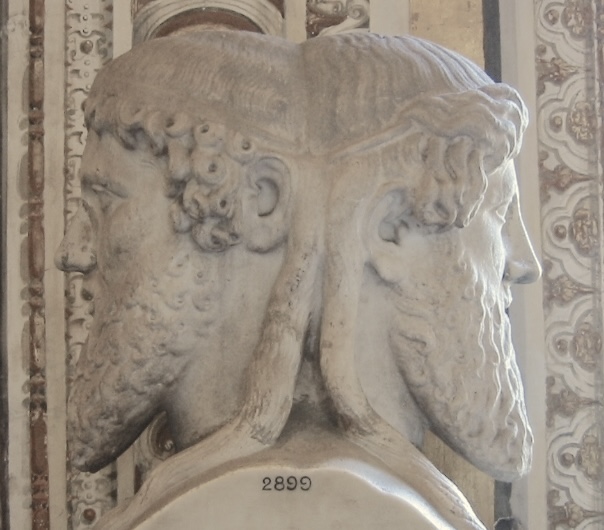 Welcome to January, the month named for the two-faced Roman god of gates and doors, beginnings and endings. It represents the perfect time for looking backward and looking forward, at Law 1.0 as we knew it and at Law 2.0 as we hope it will be.
Read the rest of this post . . . . Legal education today is operating in a technological environment that is cheaper, more widely distributed, and far more efficient than the setting in which all but the recent law school graduates experienced over the course of their own professional training. I am mindful that the legal academy is arguably the most hidebound wing of a temperamentally conservative profession. Law school faculties, for instance, spend extraordinary amounts of time debating (and, in some instances, implementing) policies that effectively disable wireless networks whose very raison d'être is to enable broadband access across an entire university campus. These items, combined with the content streaming forth from a revitalized Law School communications department, are available in a dazzling array of RSS feeds. We offer both a consolidated faculty blog and a broader news and events page. Faculty scholarship, once a mysterious process discernible only by those willing to pay exorbitant subscription fees to proprietary online research networks, is now available, free of charge, through the University of Louisville Legal Studies Research Paper Series and the University of Louisville's BEPress/Selected Works site. We syndicate these series as part of the faculty directory. For my own part, I have endeavored to post new content on a regular basis on The Cardinal Lawyer. As it is in software development and in Istanbul, so it is in law. In the very distant past, legal education emphatically followed a bazaar-like approach. Young people aspiring to the legal profession "read the law" under the tutelage of established lawyers. Christopher Columbus Langdell's invention of the case method at Harvard, over time, conferred supremacy on the cathedral-like approach. By treating law as a scientific enterprise, Langdell helped give the upper hand to those institutions wealthy enough to fund the laboratories and lab scientists of law: the law library and a professional, full-time university faculty. Not surprisingly, the content of the legal curriculum followed suit. The same courses Langdell thought essential to the practice of law ? contracts, torts, property, criminal law, civil procedure ? still dominate in the first-year curriculum of every American law school. Some also teach constitutional law; others have tried, with variable success, to add courses addressing the rise of the administrative state. But the cathedral, from the institutional primacy of the so-called elite schools to the stranglehold of the Langdellian curriculum, holds firm. Neither the cathedral nor the bazaar has prevailed outright in today's legal academy. Despite its methodological flaws, the U.S. News & World Report survey still drives students and employers toward elite schools. Law schools place disproportionate weight on the laws of the United States (especially the federal system, whenever it is possible to teach a federal variant on a given legal theme) and on judge-made law (especially if the judges in question are the Justices of the Supreme Court of the United States). But bazaar-style pressures loom. Anyone who cares about law students and the educational system they sustain must pay close attention to the emergence of a bimodally distributed market for starting salaries. For a strikingly large plurality of law students, the cathedral-style approach to legal education makes no sense. The mismatch between (immense) educational debt loads and (modest) starting salaries will surely strain the existing system. And this is to say nothing of curricular and programmatic priorities to which diverse law school constituencies ? faculty, students, alumni, surrounding legal community ? may assign different weight. Let me sum up. Here are some of the salient characteristics of Web 2.0:
Law 2.0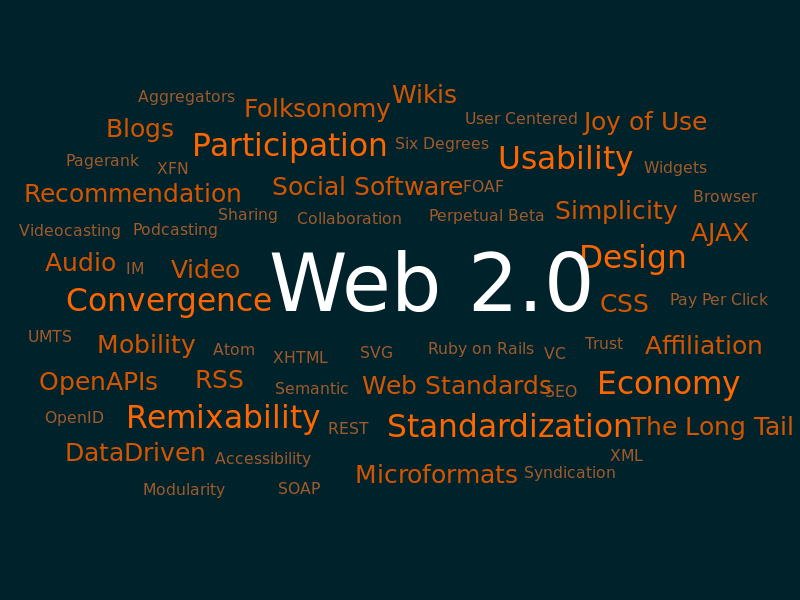 Law 2.0 refers transparently to Web 2.0, a term expressing the sentiment that a second generation of Internet-based communities and services, all designed to facilitate collaboration and sharing between users, has transformed the social meaning and impact of the World Wide Web. My allusion to Web 2.0 is very loose. I am less interested in specific components of Web 2.0 such as social-networking sites, wikis, and folksonomies than in the broad concept of law, legal education, and legally mediated social change in a world of democratized technology. In addition, invoking a notion of Law 2.0 implies the erstwhile and perhaps ongoing existence of an older model, called Law 1.0.
 All that said, the students we teach today, to say nothing of their successors and their future clients, are all wired ? and wireless ? in ways most of their instructors are not. The Law School has taken aggressive steps to prepare its students for success in the world of Law 2.0. Our renovated classrooms all include state-of-the-art technology. They are unrecognizable, in the best sense of that word, to graduates who learned the law in far more modest settings. The modal method for exam-taking today is not the handwritten exam booklet, but the laptop computer. At my express direction, the Law School's technology staff has comprehensively revamped our website not once but twice since January 2007. Every faculty member and every student organization enjoys access to a weblog of her, his, or its own.
The cathedral and the bazaar
Among many ways to explain the differences between Law 1.0 and Law 2.0, I draw great inspiration from Eric Raymond's pathbreaking 2001 book, The Cathedral and the Bazaar. Raymond wrote specifically about the rise of Linux and open source software, but his observations have revolutionary implications far beyond software development. Law 2.0, powered as it is by the democratization and diffusion of technology and legal expertise, is rapidly driving law and legal education from a centralized "cathedral" model of development to a decentralized "bazaar" model.
The power of Eric Raymond's metaphor, the cathedral and the bazaar, is best appreciated in real rather than virtual space. A single glance at real-world cathedrals and real-world bazaars captures the essential difference between these models of creativity. In the airways of your imagination, travel with me to Istanbul. On one side of your mind, envision the dome of the great Byzantine cathedral, Hagia Sophia. And then envision, on the other side, Istanbul's Grand Bazaar.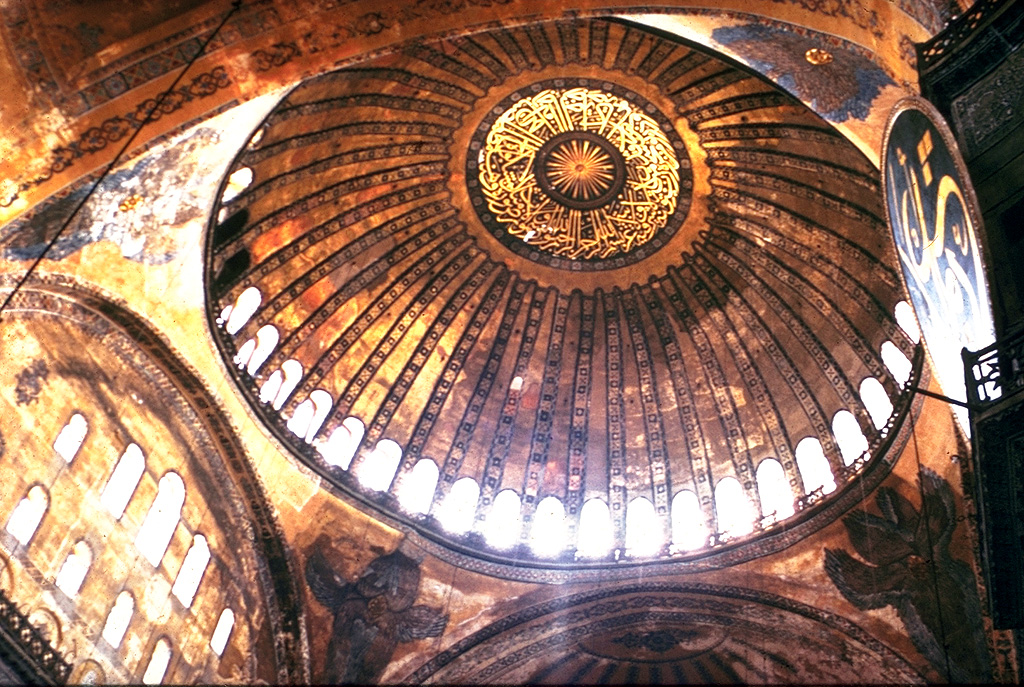

Hagia Sophia is the product of centralized, carefully coordinated planning. It is the pinnacle of Byzantine architecture, arguably the most enduring physical manifestation of a regime that held sway in Asia Minor for a thousand years. By contrast, the Grand Bazaar arose as the result of millions of market transactions over the ages. Each has its place; each has enormous cultural value. But if you are looking for the next great idea, the next innovation, the engine of social change and personal transformation. the bazaar is the place for you.
The rise of the law school bazaar Modern legal education, however, is beginning to trend back toward a bazaar-like approach. Legal education has experienced some of the decentralization, democratization, and diffusion that characterizes technology markets. There are nearly 200 accredited law schools in the United States. Flagship state universities, comprehensive or metropolitan public universities, private universities (some scandalously rich and others scandalously poor), stand-alone law schools, and even for-profit law schools all take part in the fray. Every school publishes at least one law review of its own, and the proliferation of online journals, blogs, and other electronic media has eroded the influence of casebook publishers and proprietary databases.
From Web 2.0 to Law 2.0
And here are some salient characteristics of Law 2.0:
Neither Web 2.0 nor Law 2.0 has fully dethroned its predecessor. On the World Wide Web, the cathedral still holds sway in significant respects. Microsoft, Dell, and Intel aren't going away, and neither are the elite law schools and their law reviews. But as every tourist in Istanbul knows, if you want some fresh ideas in a world lit not so much by candleight as by lightning, go to the bazaar.
Full post as published by MoneyLaw on January 30, 2008 (boomark / email).
Bead Bazaar
Children's Jewellery High in Lead, Recalled
School Racism
School District pays $250,000 in racial harassment settlement.
Student Harassment
Wichita School District pays $45,000 settlement for high school students' harassment lawsuit.
School House Abuse
Selwyn House School agrees to $5 million teacher molestation settlement.
Medicare Fraud
Cathedral Network to pay $5.3 million Medicare fraud suit.
Collins GA
Elementary School Children May Have Been Exposed to Asbestos

#1 Online Legal Resource

On 08-25 at 15:46PM
Acute perpendicular parking #NYPD #NYFD
On 08-18 at 22:18PM
Parallel parking gone bad. Too much gas UES NYC
On 08-18 at 21:41PM
UES NYC
On 08-18 at 21:25PM
Twitter suspends journalist critical of broadcast partner's coverage on dubious grounds @guyadams #nbcfail #twitterfail
On 07-30 at 17:57PM
Model example of 1st Amendment suppression by the People of New York City's Michael Bloomberg #OWS #NYPD
On 07-12 at 21:07PM
AG Holder lackadaisical on Operation in our Sites domain name seizures & RIAA lobbied free speech suppression @dajaz1
On 06-08 at 22:44PM
Why is the Catholic Church going to court over Obama contraception policy? @NewYorker commentary
On 05-31 at 10:08AM
Monks sue Louisiana for right to sell caskets made from forrest destroyed by Katrina
On 05-31 at 07:47AM
Are the abortion ultrasound laws headed for the Supreme Court?
On 05-15 at 21:52PM





The Cathedral of Our Lady of the Angels.
Muslims, Sikhs In Pakistan Feud Over Proximity of Houses of Worship
Weekend Reading I -- Religion and American Politics: Three Views of the Cathedral
Bilford on Hate Speech in Schools
Cathedral Healthcare System settles qui tam suit





 |
|
Contact Us | About Us | Celebrity Law Blog |
Our Partners | Disclaimer
| Law Blog Directory
| Law Jobs
| Law Tweets
| Oil Spill Video
All original material © 1999-2011 by USLaw.com. All other material, including Blog Directory feed content, are © by their respective copyright holders. |