
Home -> Law Blog Directory -> Practice Management Blogs -> What About Clients?
(866) 635-2689 for Personal Injury or (866) 635-9402 for Criminal Defense
Find a Local Lawyer
Divorce (866) 635-6190
Personal Injury (866) 635-2689
Criminal Defense (866) 635-9402

Practice Management
: What About Clients?Discovery: The Miracle of subdivision (f) of Rule 56
By Dan Hull

(f) When Affidavits Are Unavailable.
If a party opposing the motion shows by affidavit that, for specified reasons, it cannot present facts essential to justify its opposition, the court may:
(1) deny the motion;
(2) order a continuance to enable affidavits to be obtained, depositions to be taken, or other discovery to be undertaken; or
(3) issue any other just order.
Trial lawyers know that Rule 56 of the Federal Rules of Civil Procedure, or "Summary Judgment", gives a litigant an opportunity to win on its claims or dispose of the opponent's claims relatively quickly and without trial. Accompanied by sworn affidavits and often discovery responses, a Rule 56 motion tries to show that there is no real dispute about key facts and that the movant is entitled to judgment under the law. If granted, the movant wins.
But what if a summary judgment motion is brought against your client--suddenly and out of the blue--and the local rules or local practice of the district court don't give you much time to develop and prepare an opposition. After all, Rule 56 lets a party who has brought a claim file for summary judgment after 20 days, and defendants can file "at any time". In contentious, high stakes litigation, a quick summary judgment motion right after the commencement of a lawsuit can be extraordinarily disruptive. It will fluster the most battle-hardened been-there seen-that GC or in-house counsel.
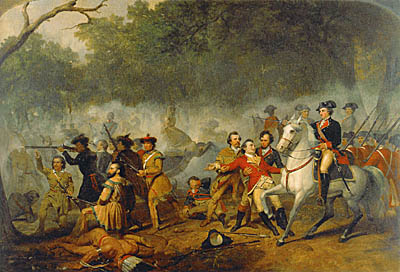
Disruptive: The early case Rule 56 motion.
Full post as published by What About Clients? on November 26, 2008 (boomark / email).
Copyright Lawsuits: Critical Issues Before Filing Copyright
Federa Rule 11(b) Considerations

#1 Online Legal Resource

On 08-25 at 15:46PM
Acute perpendicular parking #NYPD #NYFD
On 08-18 at 22:18PM
Parallel parking gone bad. Too much gas UES NYC
On 08-18 at 21:41PM
UES NYC
On 08-18 at 21:25PM
Twitter suspends journalist critical of broadcast partner's coverage on dubious grounds @guyadams #nbcfail #twitterfail
On 07-30 at 17:57PM
Model example of 1st Amendment suppression by the People of New York City's Michael Bloomberg #OWS #NYPD
On 07-12 at 21:07PM
AG Holder lackadaisical on Operation in our Sites domain name seizures & RIAA lobbied free speech suppression @dajaz1
On 06-08 at 22:44PM
Why is the Catholic Church going to court over Obama contraception policy? @NewYorker commentary
On 05-31 at 10:08AM
Monks sue Louisiana for right to sell caskets made from forrest destroyed by Katrina
On 05-31 at 07:47AM
Are the abortion ultrasound laws headed for the Supreme Court?
On 05-15 at 21:52PM





Miracle Whip Makes A Great Proxy Demographic
Discovery Rule: The only reasonable approach to statutes of limitation
New Federal Rule of Evidence could reduce litigation costs
Maine Supreme Court Finds Adjacent Landowner Timely Appealed Building Permit in Family Subdivision
PENDING: Senate Bill 235 (Set procedure for changing certain subdivision green space)
Fifth District: Discovery Rule





 |
|
Contact Us | About Us | Celebrity Law Blog |
Our Partners | Disclaimer
| Law Blog Directory
| Law Jobs
| Law Tweets
| Oil Spill Video
All original material © 1999-2011 by USLaw.com. All other material, including Blog Directory feed content, are © by their respective copyright holders. |