
Home -> Law Blog Directory -> Legal Niches Blogs -> Agricultural Law
(866) 635-2689 for Personal Injury or (866) 635-9402 for Criminal Defense
Find a Local Lawyer
Divorce (866) 635-6190
Personal Injury (866) 635-2689
Criminal Defense (866) 635-9402

Legal Niches
: Agricultural LawAgricultural & Food Law at Stanford
By Jim Chen at al.
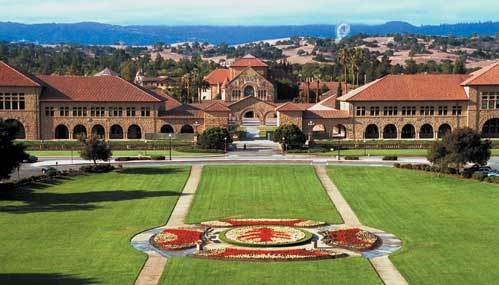
Here is a sampling of just some of the work going on at Stanford Law with respect to agricultural and food law issues -
Students in Stanford?s transactional clinic, the Organizations and Transactions Clinic (?O&T?) regularly represent nonprofit organizations involved in sustainable agriculture, food security and food system reform. The clinic, which opened in spring 2008, works with established Northern California nonprofits on corporate governance, contract and risk management matters. O&T is a one-quarter course designed to help prepare students for institutional corporate practice and, at the same time, help them see how corporate lawyers can serve community as well as commercial organizations through pro bono, board service and volunteer work.

Real property projects that the clinic has undertaken include:
- development of a lease and operating policies for an agricultural education organization that leases land to its beginning farmer students;
- preparation of a license agreement and operating policies for a sponsor of a multi-user agricultural park; and,
- development of a model community garden lease and participant agreements.
- advice and document preparation regarding community produce gleaning and local food branding programs;
- development of applications, liability releases and policies for program participants and volunteers; and,
- revision of contracts used by food banks with satellite food distribution sites.
- assisting a large farmers? market sponsor with a complete revision of its market rules and regulations;
- development of a template site agreement for use with municipalities, shopping center operators and other owners of farmers' market sites; and
- development of documents for CSAs and for programs designed to help small farmers get access to institutional buyers.
Clinic projects have exposed students to relevant subject matters and core skills demands, provided opportunities for students to work on both conventional and larger, more unstructured matters, and inspired the clinic to devote more resources to clients located in smaller communities outside the immediate Bay Area. In all, Jay says the sector generates challenging, engaging and fun projects for helping prepare students for corporate practice and their responsibilities as lawyers.
Jay encourages other clinic directors to explore food system opportunities -- as he notes, these clients are everywhere. And, they are a diverse group that enables students to encounter a variety of legal subject matters in a variety of modes, doing work in an area that calls out for the dedication of legal talent and resources. Food system clients are an unusually good source of relevant projects for getting ready for corporate practice. And, as clients, they are deeply appropriate recipients of pro bono resources.
Jay indicated that he would be happy to talk with clinic directors and others interested in exploring similar opportunities. He can be reached via email at Stanford.

Stanford Law faculty members regularly participate in university initiatives relating to food policy.

Next month, Professor Thompson, along with Professor Mariano-Florentino Cuellar, will speak at the conference, Connecting the Dots: The Food, Energy, Water and Climate Nexus.
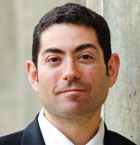
From early 2009 through the summer of 2010, Professor Cuellar was on leave from Stanford to serve as Special Assistant to the President for Justice and Regulatory Policy at the White House. He led the Domestic Policy Council?s work on a variety of subjects, including public health, food safety and rural and agricultural policy, and was actively involved in the development of the Food Safety Modernization Act.
Stanford Law is leading the way in the integration of food law, agricultural law, and environmental law, and I am delighted to have the opportunity to post about the exciting work that is going on. I welcome updates as clearly, this is an area that will only grow in importance.

Full post as published by Agricultural Law on March 20, 2011 (boomark / email).
Pet Food Recall and Deaths
Dogs and Cats Sickened by Tainted Menu Food Products
Pet Food Recall
Diamond Pet Food sets up $3.1 million class action fund for substandard dog food.
Food/Supplements
involving food poisoning, food product recalls, false advertising or labeling, vitamin, weight loss and diet supplement issues.
PETCO
Animal Food Distribution Unsanitary, Food Seized
Menu Food
$240,000 settlement reached in Hawaii class action contaminated pet food suit.
Food Dyes Linked to Behavioral Problems
Ban Urged
Mars Petcare
Recalls Dry Pet Food Manufactured at Everson PA Plant

#1 Online Legal Resource

On 08-25 at 15:46PM
Acute perpendicular parking #NYPD #NYFD
On 08-18 at 22:18PM
Parallel parking gone bad. Too much gas UES NYC
On 08-18 at 21:41PM
UES NYC
On 08-18 at 21:25PM
Twitter suspends journalist critical of broadcast partner's coverage on dubious grounds @guyadams #nbcfail #twitterfail
On 07-30 at 17:57PM
Model example of 1st Amendment suppression by the People of New York City's Michael Bloomberg #OWS #NYPD
On 07-12 at 21:07PM
AG Holder lackadaisical on Operation in our Sites domain name seizures & RIAA lobbied free speech suppression @dajaz1
On 06-08 at 22:44PM
Why is the Catholic Church going to court over Obama contraception policy? @NewYorker commentary
On 05-31 at 10:08AM
Monks sue Louisiana for right to sell caskets made from forrest destroyed by Katrina
On 05-31 at 07:47AM
Are the abortion ultrasound laws headed for the Supreme Court?
On 05-15 at 21:52PM





Conference: Agricultural Markets and Food Price Inflation
World's largest database of food, hunger and agricultural information now fully accessible online
BRAZILS AGRICULTURAL MIRACLE. It has become the first tropical agricultural giant and the first
Stanford Law & Policy Review Symposium: Food Policy and Health -- Call for Papers
Schneider on Agricultural Law: Food, Farming, and Sustainability
HMM: Appetite and destruction: global food insecurity and speculation in agricultural commodities.





 |
|
Contact Us | About Us | Celebrity Law Blog |
Our Partners | Disclaimer
| Law Blog Directory
| Law Jobs
| Law Tweets
| Oil Spill Video
All original material © 1999-2011 by USLaw.com. All other material, including Blog Directory feed content, are © by their respective copyright holders. |